

Metal roofing costs roughly $8–$25 per square foot installed and lasts 40–70 years for standing seam systems. Asphalt shingles cost $4–$10 per square foot and last 20–30 years. On paper, metal looks like the obvious long-term winner. In practice, the decision hinges on things most comparison articles skip or oversimplify: what “resale value” percentage actually measures, what your insurer requires in exchange for a metal-roof discount, whether “metal roofs are noisy” is still true, and which type of metal roof you’re even comparing — because standing seam, exposed-fastener panels, and metal shingles are not the same product.
This guide covers all of that, sourced and broken down the same way we handle every roofing cost guide on this site.
Key takeaways:
- Metal roofing costs $8–$25 per sq ft installed; asphalt shingles cost $4–$10 per sq ft (This Old House, NerdWallet).
- Standing seam metal lasts 40–70 years; exposed-fastener metal panels last 20–30 years; asphalt shingles last 20–30 years, often closer to 24–25 years in practice.
- Asphalt shingle replacement recoups about 68% of its cost at resale; metal recoups about 50% — but this percentage doesn’t account for remaining roof life.
- Metal roof insurance discounts often require signing a Cosmetic Damage Waiver, which excludes coverage for hail dents that don’t cause a leak.
- Independent data (Cool Roof Rating Council) puts average cooling-cost savings from reflective roofing at 7–15%; a DOE-funded Oak Ridge study found up to 25% under a specific ventilated installation method — higher figures circulating online come from industry sources, not independent studies.
- Metal roofing is fully recyclable at end of life; less than 10% of the 11–13 million tons of asphalt shingles torn off annually gets recycled, per EPA estimates.
How We Researched This Guide
Every cost, lifespan, and performance figure below traces to a published dataset, an independent research body, or an industry/insurance source — clearly labeled as such where the distinction matters. Where only industry-published or contractor-level evidence exists for a claim, we say so rather than presenting it as an established, independent fact.
- Cost datasets — This Old House’s 2026 asphalt vs. metal roof cost survey, NerdWallet’s per-square-foot pricing breakdown, and our own roof replacement cost guide, which covers material pricing by roof size in more depth
- Repair cost data — our own roof leak repair cost guide, which breaks down repair cost by material and leak type
- Resale data — Cost vs. Value Report recoup percentages cited across multiple sources, plus HomeLight’s agent survey on metal roofing and home value
- Insurance guidance — State Farm’s metal roof pros and cons breakdown, cross-checked against contractor-published commentary on cosmetic damage waiver terms
- Energy performance — the Cool Roof Rating Council’s homeowner guidance, an independent nonprofit, and a DOE-funded Oak Ridge National Laboratory study reported by Earth911
- Metal panel types — Sheffield Metals’ standing seam vs. exposed fastener comparison and multiple contractor-published comparisons, cross-checked against each other
- Warranty structure — Roofing Contractor’s overview of shingle vs. metal warranty types
- Sustainability and recycling — EPA-sourced figures on asphalt shingle waste as reported by GAF and ARMA’s industry sustainability position, plus the Metal Roofing Alliance’s published recyclability figures (flagged below as industry-sourced)
Quick Answer: Metal Roof vs Shingles
| Asphalt Shingles | Metal Roofing | |
|---|---|---|
| Cost per sq ft installed | $4 – $10 | $8 – $25 |
| Typical 2,000 sq ft roof | $8,000 – $20,000 | $16,000 – $50,000+ |
| Lifespan | 20 – 30 years (often 24–25 in practice) | 20–30 yrs (exposed fastener) to 40–70 yrs (standing seam) |
| Resale recoup | ~68% of cost | ~50% of cost |
| Insurance discount | Rarely qualifies | Often qualifies, usually with a waiver attached |
| Cooling savings (independent data) | Baseline | 7–15% average; up to 25% under specific installation |
| Recyclability | Largely landfilled; <10% recycled | 100% recyclable at end of life |
| Best for | Shorter ownership window, tighter budget | Long-term ownership, storm-prone climates |
Cost Comparison by Roof Size
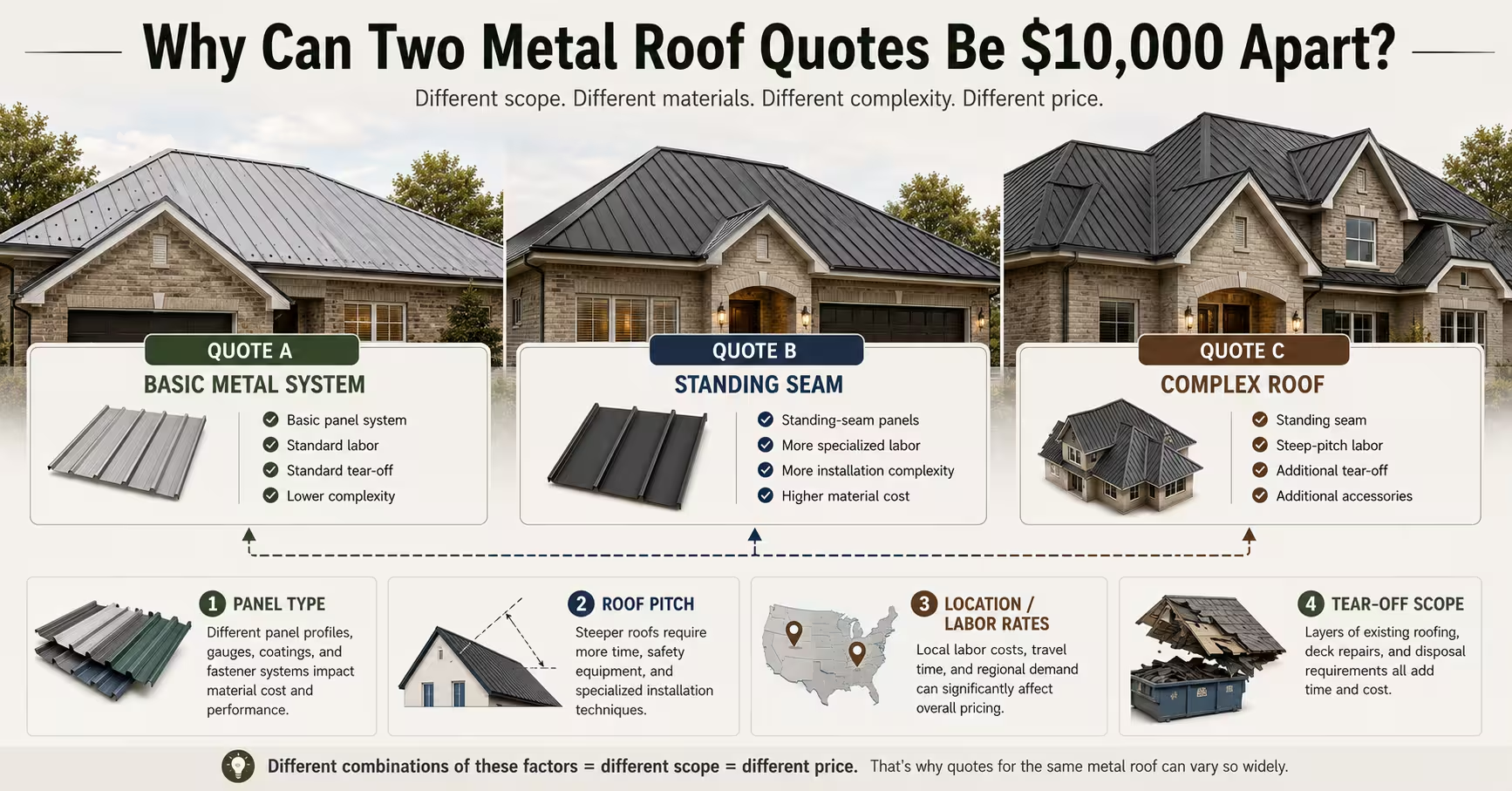
The 2,000 sq ft figure most articles quote hides how much cost scales with roof size — and roof area, not house square footage, is what actually gets priced. A 2,000 sq ft house typically carries closer to 2,400–2,600 sq ft of roof area once pitch is factored in. Applying the sourced per-square-foot ranges above across common sizes:
| Roof area | Asphalt shingles | Metal (exposed fastener) | Metal (standing seam) |
|---|---|---|---|
| 1,500 sq ft | $6,000 – $15,000 | $12,000 – $22,500 | $15,000 – $37,500 |
| 2,000 sq ft | $8,000 – $20,000 | $16,000 – $30,000 | $20,000 – $50,000 |
| 2,500 sq ft | $10,000 – $25,000 | $20,000 – $37,500 | $25,000 – $62,500 |
| 3,000 sq ft | $12,000 – $30,000 | $24,000 – $45,000 | $30,000 – $75,000 |
These are straight-line calculations from the sourced per-square-foot ranges above, not independently published totals for each size — actual quotes will shift with pitch, region, and tear-off scope, so treat these as planning ranges rather than fixed prices. For a detailed size-and-material breakdown across all roofing materials, see our roof replacement cost guide.
30-Year and 50-Year Ownership Cost
Sticker price alone misrepresents this comparison, because it ignores replacement cycles. Here’s the ownership math using the sourced cost and lifespan ranges above, applied to a 2,000 sq ft roof at the middle of each cost range:
| Asphalt shingles ($14,000, ~25-yr practical life) | Standing seam metal ($30,000, ~55-yr average life) | |
|---|---|---|
| Over 30 years | 1 full replacement likely (~$14,000 + a partial second install started) | 0 replacements; original roof still has ~25 years of life remaining |
| Cost per year over 30 years | Roughly $900–$950/yr (accounting for a second tear-off and partial reinstall) | Roughly $1,000/yr on the original install alone |
| Over 50 years | 2 full replacements (~$28,000+ in materials and labor alone, before price inflation) | 0–1 replacements; well within or just past standing seam’s typical lifespan |
| Cost per year over 50 years | Roughly $700–$750/yr including at least one full second replacement | Roughly $600/yr if the roof lasts the full 55 years |
Read this table carefully — it’s illustrative math, not a published study. It doesn’t account for material price inflation between replacement cycles, financing costs, or regional labor variation, all of which would push the shingle side higher in practice. The core finding that holds up regardless of exact inflation assumptions: over a 50-year ownership horizon, standing seam metal’s per-year cost is usually equal to or lower than repeated shingle replacement, while over a 15–20 year horizon shingles are reliably cheaper because you likely won’t need a second replacement in that window.
Metal Roofing Types: Standing Seam vs Exposed Fastener vs Metal Shingles
“Metal roof” isn’t one product, and lumping all three types together is where a lot of comparison articles go wrong.
| Exposed-Fastener Panels | Standing Seam | Metal Shingles | |
|---|---|---|---|
| How it’s attached | Screwed directly through the panel face | Concealed clips under raised interlocking seams | Often through-fastened, sometimes concealed depending on system |
| Typical lifespan | 20–30 years | 40–70 years | 30–50 years |
| Relative cost | Lowest of the three | Highest — commonly cited around 1.8x exposed-fastener pricing | Mid-range to high, often above exposed-fastener |
| Maintenance need | Higher — exposed fastener washers degrade and need periodic inspection/replacement, commonly every 5–10 years | Lower — hidden fasteners rarely need attention | Moderate — depends on whether fasteners are exposed or concealed |
| Appearance | Corrugated or ribbed, utilitarian look | Sleek vertical panel lines, modern look | Designed to mimic shingles, slate, or shake |
| Best use case | Budget-conscious projects, secondary structures (garages, barns), simple roof planes | Primary residences where the owner plans to stay 15+ years | Homeowners who want metal’s durability with a traditional shingle appearance |
The lifespan and maintenance gap between these three comes down almost entirely to the fasteners. Exposed screws sit directly in the weather, and the rubber washers under them degrade with UV exposure and thermal cycling — several roofing sources cite washer replacement on 5-to-10-year cycles as standard maintenance. Standing seam’s concealed-clip design avoids that failure point almost entirely, which is the main reason it carries a longer typical lifespan and a materially higher price tag. Metal shingles land in between, with performance depending heavily on the specific fastening system a manufacturer uses.
Practical implication: if you’re comparing “metal roof cost” against shingles, make sure you know which metal type a quote refers to — the exposed-fastener option most budget contractors quote first is a meaningfully different product than the standing seam system most “40-70 year” claims describe.
Lifespan Compared Honestly
Combining the type-specific data above with shingle data: asphalt shingles average 20–30 years, though most land closer to 24–25 years in practice once you factor in UV exposure, thermal cycling, and moisture — a “30-year” shingle product rarely delivers the full advertised span under real-world conditions. Exposed-fastener metal panels run close to shingle lifespan at 20–30 years. Standing seam is the outlier at 40–70 years, and metal shingles fall in the 30–50 year range depending on their fastening system.
This matters directly for the cost comparisons above: pairing shingle pricing against exposed-fastener metal pricing shows a much smaller lifespan gap than pairing it against standing seam — a distinction most “metal vs shingles” articles blur by treating all metal roofing as one product.
Maintenance Comparison
Maintenance needs differ by task, not just frequency:
| Task | Asphalt Shingles | Standing Seam Metal | Exposed-Fastener Metal |
|---|---|---|---|
| Routine inspection | Annual, plus post-storm | Annual | Annual, with specific fastener/gasket check |
| Fastener/washer check | Not applicable | Rarely needed — fasteners are concealed | Every 5–10 years; washers degrade and can require replacement |
| Flashing maintenance | Periodic resealing around chimneys, valleys, skylights | Same general need, though metal-to-metal flashing details differ | Same general need |
| Granule loss / surface wear | Common with age; bald patches signal replacement need | Not applicable | Not applicable |
| Coating/paint upkeep | Not applicable (shingles aren’t repainted) | Coating can be recoated decades out; rarely needed short-term | Same as standing seam |
| Moss/algae growth | Common in humid, shaded climates; algae-resistant shingle lines exist | Naturally resistant | Naturally resistant |
| Debris/gutter cleaning | Standard for any roof | Standard for any roof | Standard for any roof |
| Most common maintenance issue | Granule loss, cracked/missing shingles after wind events | Sealant degradation at panel-to-flashing joints over decades | Fastener backing out or washer failure, leading to small leaks |
The practical difference: shingles need more frequent minor attention (missing shingle here, a flashing reseal there) spread across their lifespan, while exposed-fastener metal needs a specific, scheduled task — fastener and washer inspection — that if skipped is the single most common cause of metal roof leaks according to multiple contractor sources. Standing seam is genuinely the lowest-maintenance option of the three because it removes that failure point.
Resale Value: Why the Recoup Percentage Is Misleading
Nearly every roofing comparison cites the same figure: asphalt shingle replacement recoups roughly 68% of its cost at resale, versus roughly 50% for metal, per Cost vs. Value Report data cited across multiple industry sources. Read in isolation, shingles look like the smarter money move.
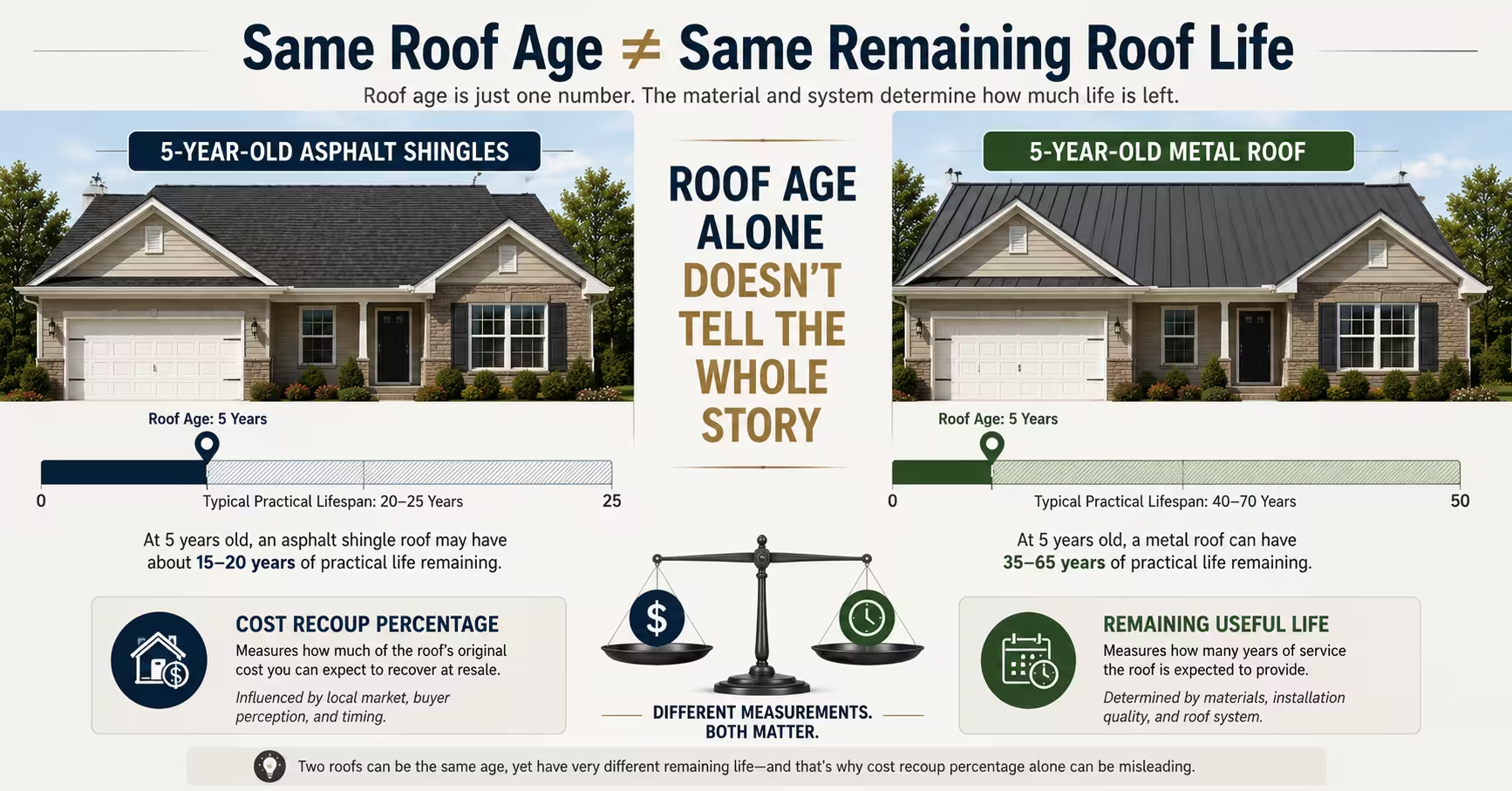
Here’s what that percentage doesn’t capture: it’s calculated against total spend, not against remaining useful life. A 68% recoup on a $14,000 shingle roof and a 50% recoup on a $30,000+ standing seam roof aren’t measuring comparable things, because the two roofs aren’t handing the next owner the same asset.
A five-year-old standing seam roof hands a buyer decades of remaining life with minimal near-term replacement risk. A five-year-old shingle roof — especially in a hail-exposed region — may already be a third of the way through its practical lifespan. HomeLight’s survey of real estate agents notes rising homeowner interest in metal roofing specifically for its energy efficiency and longevity, and in storm-prone markets, buyers and their insurers increasingly ask about roof age and material before closing.
The honest read: selling within a few years, shingles are the better financial call, since you won’t be around to benefit from metal’s longevity. Staying long-term, the recoup percentage matters far less than total cost of ownership and remaining roof life.
Insurance Discounts and the Cosmetic Damage Waiver
Many insurers offer premium discounts for metal roofs, citing fire resistance and storm durability, per State Farm’s own guidance on metal roof pros and cons. Over 15–20 years those discounts can add up to real savings. But a common condition attached to that discount, documented across contractor sources, is a Cosmetic Damage Waiver: if hail dents your metal roof without causing an actual leak, the insurer isn’t obligated to pay for repair, since the damage is classified as cosmetic rather than functional.
Practically, that means your roof can end up visibly hail-pocked with no coverage to fix the appearance, in exchange for the lower premium you’ve been paying. That’s a materially different trade-off than “cheaper insurance,” and it’s worth confirming directly with your insurer — ask specifically whether a cosmetic damage waiver applies to your policy and where the line sits between cosmetic and functional damage in their claims process — before choosing metal partly for the insurance angle.
Shingles typically don’t carry this trade-off, mostly because they rarely qualify for the discount in the first place.
Energy Efficiency: What the Data Actually Supports
This is the section where the biggest numbers online tend to be the least reliable ones, so the sourcing matters more than usual here.
- Independent baseline: the Cool Roof Rating Council, a nonprofit industry-standards body rather than a roofing manufacturer, puts average cooling-cost savings from reflective roofing at 7% to 15% of total cooling costs.
- Higher-end, condition-specific figure: a DOE-funded study conducted at Oak Ridge National Laboratory found up to a 25% reduction in cooling costs and a 45% decrease in heat flow — but specifically when the metal roof was installed with a batten/counter-batten system creating an air gap beneath the panels, not a standard direct-to-deck install. That ventilation detail is the actual driver of the higher figure, not the metal itself.
- General reflective-roof estimate: the EPA has separately estimated that reflective roofing broadly can save up to 40% of cooling energy costs, but this is a general estimate for reflective roofing as a category, not a metal-specific, independently verified figure.
- Figures to treat skeptically: claims of “10–40% savings” or “up to 90% solar reflectance” circulating on contractor and industry-association sites (including metal roofing trade groups) are industry-published rather than independently verified, and tend to cite the upper end of ranges without the installation caveats that drive them.
What actually affects real savings: climate (hot, sun-heavy, high-AC-demand regions see meaningfully more benefit than mild climates), roof color and coating (lighter, reflective coatings outperform dark panels, though modern “cool roof” pigmented coatings narrow this gap even on dark colors), and installation method (a ventilated air gap beneath the panels measurably increases savings over direct-to-deck installation). A homeowner in a mild climate with a well-insulated attic shouldn’t expect anywhere near the upper-end figures quoted in metal roofing marketing.
Installation Differences
At a basic level, both materials share the same first steps — tear-off of the old roofing material (when required) and inspection or repair of the decking underneath. Where they diverge:
- Underlayment: metal roofing typically requires a high-temperature synthetic or self-adhered underlayment rated for the heat metal panels can reach in direct sun, which differs from standard shingle underlayment.
- Decking compatibility: metal can sometimes be installed over an existing single layer of shingles, avoiding a full tear-off — but this depends on local building code and how many layers already exist, and isn’t universally allowed.
- Installation complexity: exposed-fastener panels install relatively quickly and are within reach of many general roofing contractors. Standing seam requires precise panel measurement, seaming equipment, and specialized training, which is the main reason it costs more in labor, not just materials.
- Labor cost drivers: roof pitch, panel length and cutting requirements, and the number of penetrations (chimneys, skylights, vents) affect metal installation labor more than shingle labor, since metal flashing details around penetrations require more precision.
This isn’t a full contractor installation walkthrough — the practical point for a homeowner comparing quotes is that a “standing seam install” quote should reflect meaningfully more skilled labor than an “exposed-fastener install” quote, and a quote that doesn’t seem to account for that gap is worth asking about directly.
Warranty Comparison
Shingle and metal warranties aren’t structured the same way, and homeowners comparing “warranty length” without understanding what’s covered often end up comparing the wrong thing.
| Warranty type | Asphalt Shingles | Metal Roofing |
|---|---|---|
| Material warranty | Covers manufacturing defects in the shingle itself; commonly prorated after an initial non-prorated period | Metal roofing typically doesn’t carry a “material” warranty in the same sense — coverage instead centers on the substrate and paint/finish system |
| Finish/coating warranty | Not generally applicable | Paint or coating warranties can run 20–50 years depending on the coating system used (e.g., premium PVDF/Kynar finishes vs. economy coatings), per Roofing Contractor’s warranty overview |
| Wind/algae warranty | Common add-ons on shingle warranties | Not applicable in the same form |
| Workmanship warranty | Separate from material warranty; typically provided by the installing contractor, not the manufacturer | Same structure — a separate, contractor-provided warranty, sometimes available as a certified add-on program |
| Proration | Common — coverage often steps down over time | Less commonly prorated, though this varies by manufacturer and coating tier |
The practical distinction homeowners should make: a “50-year warranty” on a metal roof usually refers to the paint/finish holding its color and resisting chalking — it is not automatically a guarantee against leaks or structural failure. Weathertightness or leak coverage is frequently a separate, shorter-term warranty with its own conditions, sometimes requiring a certified installer and periodic inspections. Don’t assume one document covers everything; ask specifically which of these — material defect, finish/coating, and workmanship — a quoted warranty actually includes, and for how long each one runs.
Sustainability and Recycling
This is a secondary factor in most homeowners’ decisions, but worth including since the two materials differ substantially here.
The EPA estimates that 11 to 13 million tons of asphalt shingles are torn off US roofs annually, and less than 10% of that volume is currently recycled into paving or other applications — the rest goes to landfill, according to figures reported by GAF and corroborated by asphalt industry publications. The Asphalt Roofing Manufacturers Association has set an industry goal of reducing landfill disposal of asphalt roofing to 50% by 2035, an aspirational industry target rather than a current achievement.
Metal roofing is widely described as fully recyclable at the end of its service life, and manufactured with meaningful recycled content — the Metal Roofing Alliance, an industry trade group, cites roughly 25% or more recycled content depending on the metal type. Since that figure comes from an industry association rather than an independent audit, treat it as directionally accurate rather than independently verified, though metal’s basic recyclability at end-of-life is not a disputed point across the roofing industry generally.
This factor is worth weighing if sustainability specifically matters to you, but it shouldn’t be the deciding factor in a decision that’s primarily about cost, climate fit, and ownership timeline.
Noise: Myth vs Reality
You’ll find genuinely contradictory claims across roofing sites here — some insist metal roofs are no louder than shingles, others insist shingles are clearly quieter. The disagreement comes down to installation method, not the material itself.
Older or budget metal systems — particularly exposed-fastener panels installed over open battens with no solid decking — can transmit rain and hail noise noticeably more than shingles. That’s the origin of the “metal roofs are loud” reputation, and for that installation style, it’s not unfounded.
Modern standing seam systems installed over solid decking, with proper underlayment and insulation, perform very differently — the rigid substrate and sound-dampening layers absorb most impact noise, bringing the experience close to a shingle roof in ordinary rain. Heavy hail is still audible on either material; asphalt’s soft surface just muffles it slightly more.
Practical takeaway: ask your contractor specifically about solid decking and underlayment specs before signing, rather than assuming the material alone determines noise level.
Climate and Regional Fit
Neither material wins universally — fit shifts with local weather risk:
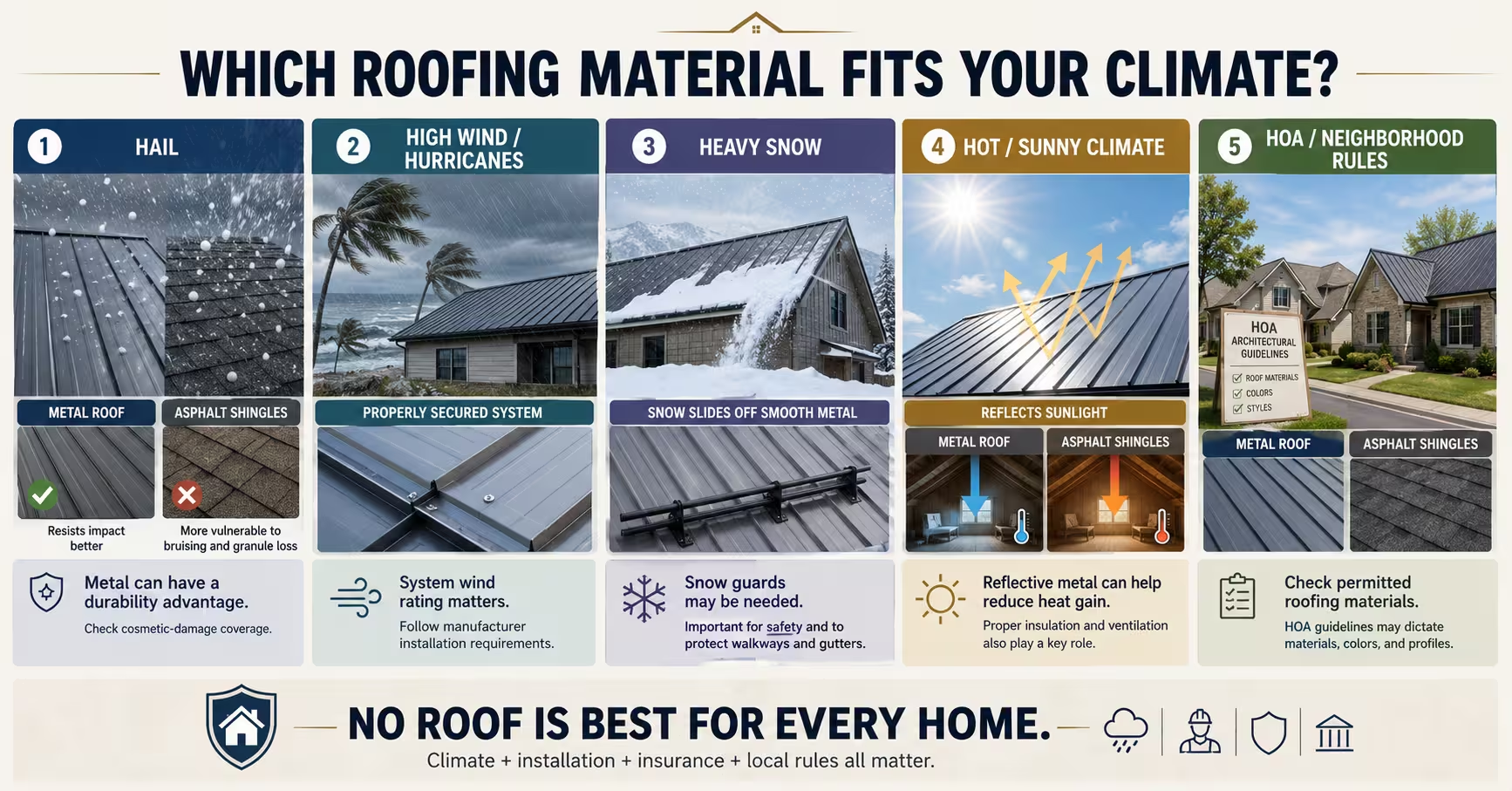
- Hail-prone regions (Texas, Oklahoma, Colorado, parts of the Midwest): metal resists denting better than shingles resist granule loss and cracking, but confirm the cosmetic damage waiver terms above before assuming full storm coverage.
- High-wind and hurricane-prone coastal areas: metal panels rated for 120–140 mph winds generally outperform standard shingles rated closer to 80 mph, though impact-rated architectural shingles narrow that gap.
- Heavy snow regions: metal sheds snow more efficiently thanks to its smooth surface, reducing ice dam risk, though steep metal roofs need snow guards to prevent sudden slide-off.
- Hot, sun-heavy climates: this is where metal’s energy savings are most likely to be meaningful — see the energy efficiency section above for realistic ranges.
- HOA-governed neighborhoods: many HOAs still require asphalt shingles or a specific architectural style — check guidelines before pricing out metal.
Decision Framework
| Choose Shingles | Choose Metal | |
|---|---|---|
| Ownership plan | Selling within 5–10 years | Staying 15+ years |
| Budget | Tighter upfront budget | Can absorb higher upfront cost for lower long-term cost |
| Climate | Mild, low storm risk | Hail, high wind, heavy snow, or intense summer heat |
| HOA rules | HOA requires traditional shingle look | No HOA restriction, or HOA permits metal |
| Maintenance tolerance | Comfortable with periodic minor repairs | Prefer minimal ongoing maintenance (standing seam specifically) |
| Insurance | No metal discount available in your area, or waiver terms are unfavorable | Insurer offers a genuine discount and you’ve confirmed the waiver terms |
Consider metal especially if: you’re in a hail or high-wind region and plan to stay long-term, since the durability and lifespan advantages compound most clearly under those two conditions together.
Consider shingles especially if: you’re under an HOA that mandates a shingle appearance, or your ownership timeline is genuinely uncertain — shingles keep your options open without over-investing in a roof you might not own long enough to benefit from.
Frequently Asked Questions
Does a metal roof really last twice as long as shingles? It depends on the metal type. Standing seam metal, at 40–70 years, roughly doubles or triples shingle lifespan (20–30 years). Exposed-fastener metal panels, at 20–30 years, run close to shingle lifespan and don’t represent the same longevity advantage.
Can you install a metal roof over existing shingles? Sometimes. Metal can occasionally be installed over a single existing shingle layer, which reduces tear-off cost — but this depends on local building code and how many shingle layers are already present. Confirm with a licensed roofer and your local permitting office before assuming it’s allowed.
Which roof is better for resale? Asphalt shingles recoup a higher percentage of cost at resale (roughly 68% vs. 50% for metal, per Cost vs. Value Report data), but that percentage measures cost recouped, not remaining roof life. A newer metal roof can still be a stronger selling point in storm-prone markets where buyers and insurers scrutinize roof age.
How much more does a metal roof cost over its lifetime? Upfront, metal costs roughly 2–3x more than shingles per square foot. Over a 50-year ownership window, standing seam metal’s per-year cost is often comparable to or lower than shingles once repeated shingle replacements are factored in — see the ownership cost table above. Over a shorter 15–20 year window, shingles are reliably cheaper since a second shingle replacement usually isn’t needed yet.
Do metal roofs actually lower my insurance premium? Often, yes, but usually with a catch: many insurers require a Cosmetic Damage Waiver in exchange, meaning hail damage that doesn’t cause a leak may not be covered.
Are metal roofs noisy in the rain? Metal roof noise depends almost entirely on installation method, not the material. Metal installed over solid decking with proper underlayment performs close to shingles in normal rain; older exposed-fastener systems installed over open battens can be noticeably louder.
Can I install a metal roof myself to save money? DIY metal roof installation is not recommended for most homeowners, especially standing seam systems. These require specialized tools and training; a poor install increases leak risk and can void manufacturer warranties.
Is metal roofing worth it in a mild climate with no major storms? It can still make sense for longevity, but the storm-resistance and energy-savings advantages matter less without hail, high wind, heavy snow, or significant AC demand — shingles may be the more cost-effective choice in that case.
The Bottom Line
Shingles win on upfront cost, install speed, and resale recoup percentage. Metal — specifically standing seam — wins on lifespan, storm resistance, and total cost of ownership if you’re staying long-term, though exposed-fastener metal narrows that lifespan gap considerably and needs its own maintenance schedule to avoid becoming the weaker option. Insurance, noise, and energy savings all come down to specific policy terms, installation method, and climate — not the material label alone. Get warranty terms, insurance waiver conditions, and installation specs in writing before you decide.
To price your own roof by material, pitch, and size rather than relying on national averages, use our roof cost calculator.

Baldeep builds and researches content sites full time. For ReadLikePro he
compiles home service pricing from contractor quotes, industry cost surveys,
and public data, then checks the numbers against more than one source before
publishing. He isn’t a licensed contractor, so every estimate here is a
research-backed range, not a quote for your specific job.