

Search for window cleaning cost right now and you’ll find one established pricing source quoting $8 per window and another quoting $129 per window. Same country, same year, same service. A 15x gap sitting on the first page of results.
Both figures are defensible. Neither one, on its own, tells you whether the quote in your inbox is fair.
Here’s the working answer. For standard residential window cleaning, published 2026 pricing commonly falls around $8 to $16 per counted window for interior and exterior work — though companies may price by pane, by hour, or by minimum service charge instead, which is where most of the confusion starts. A full house visit typically lands between $150 and $450.
Height and counting method move that number more than anything else. And almost every company sets a minimum charge that quietly overrides the per-window math on smaller jobs.
A note on terminology before we go further, because sources use it loosely: throughout this article, ground floor means first-story windows, second story means the floor above that, and third story and above covers anything higher. The pricing premium starts at the second story and gets steeper from there.
Window Cleaning Cost at a Glance
| Pricing model | Typical 2026 range | Notes |
|---|---|---|
| Per window (ground floor, in + out) | $8 – $16 | Most common residential model |
| Per window (third story and above) | $10 – $40 | Extra equipment and safety time |
| Second-story surcharge | $3 – $5 per window | Added on top of base rate by some companies |
| Per pane | $4 – $8 | Used on multi-pane and French windows |
| Per hour, per cleaner | $45 – $75 | Used when job scope is unpredictable |
| Whole-house visit | $150 – $450 | Varies heavily by story count |
| Published marketplace averages | $220 – $283 | Different datasets, not directly comparable |
| Minimum job fee | $75 – $250 | Applies whether you have 6 windows or 60 |
| Commercial hourly | $50 – $100 | Building size and access drive this |
Ranges compiled from 2026 cost data published by HomeGuide, Angi, Thumbtack, and Housecall Pro.
Notice that even published national pricing averages aren’t represented by one number. Angi’s 2026 cost data puts a typical residential visit at $150 to $302. Thumbtack’s marketplace pricing lands higher, at a $283 average with most jobs between $202 and $397. Both are real. They’re measuring slightly different pools of jobs — Angi leans on homeowner-reported project costs, Thumbtack on quotes submitted through its own platform.
Why Published Window Cleaning Prices Disagree So Much
This is the part almost nobody explains, and it’s the single most useful thing to understand before you compare quotes.
Per window versus per pane
A “window” and a “pane” are not the same unit, and companies switch between them freely. This is why This Old House quotes a range as wide as $8 to $40 per window — the spread isn’t measuring price variation so much as glass complexity.
A basic double-hung window runs around $8. A large picture window split into eight panes can hit $40 at roughly $5 per pane, according to pricing benchmarks used by window cleaning contractors. Same wall, same house, five times the price, because the second one is being counted as eight billable units.
The distinction becomes more complicated with specialty glass. Many companies count a sliding glass door or an oversized picture window as two panes even when it’s a single sheet of glass, because it takes roughly twice as long to squeegee cleanly.
So when two companies quote your house “per window” and land 60% apart, the difference often isn’t greed. It’s counting rules. Ask each one directly: how are you counting my French windows and my patio door?
Interior only, exterior only, or both
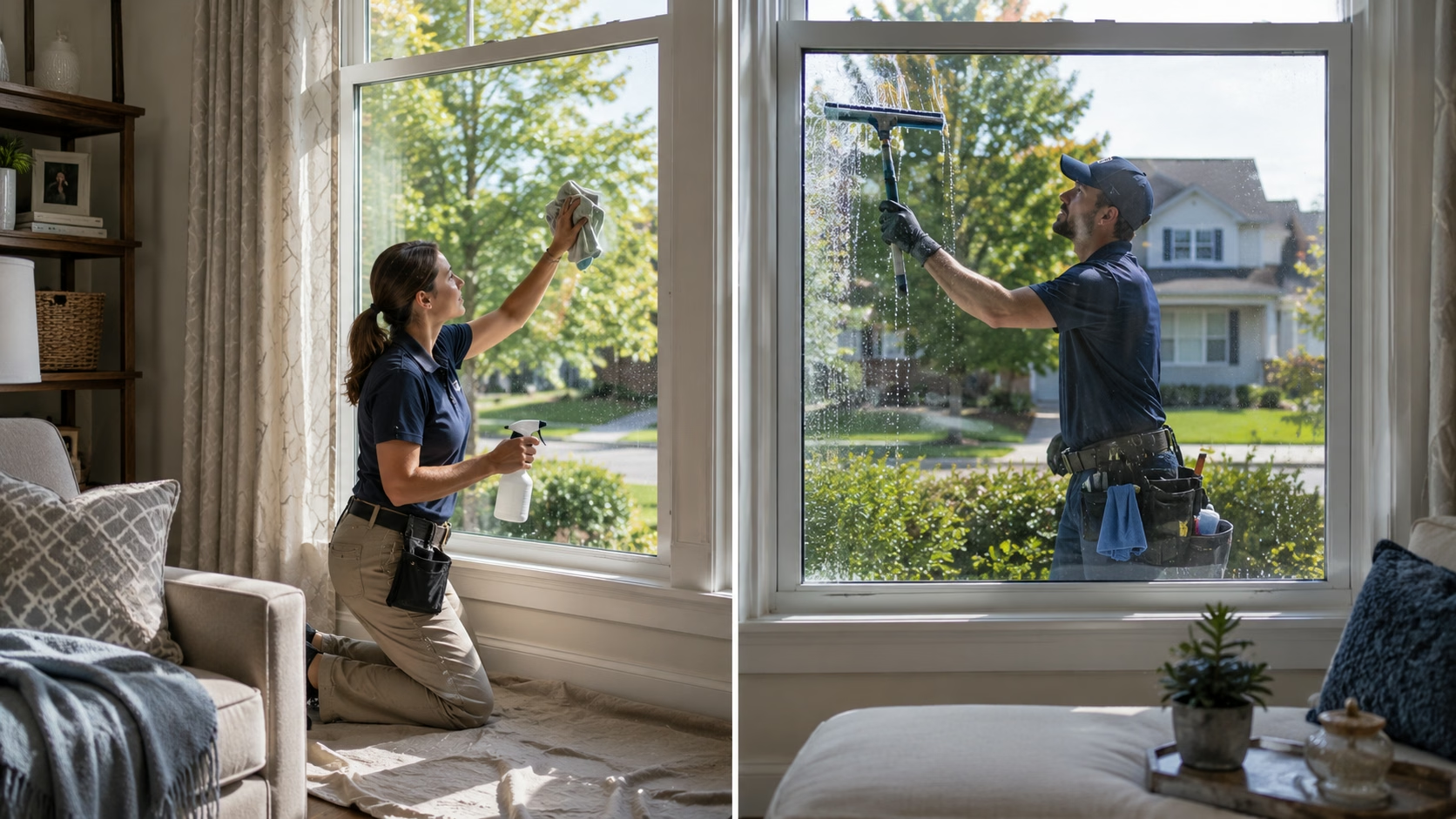
Exterior-only cleaning is common and noticeably cheaper. Interior work means moving furniture, laying drop cloths, working around pets and kids, and taking blinds down.
A quote that looks $200 lower than the others is frequently an exterior-only quote sitting next to full-service quotes. Always confirm scope before you compare price.
Why some calculators show much higher per-window numbers
Homewyse’s window cleaning calculator listed $129 to $162 per window as of January 2026, which looks absurd sitting next to HomeGuide’s $8 to $16 range.
The difference is methodology. Homewyse builds estimates using a unit-cost model that loads the full job overhead — travel, setup, equipment, insurance, minimum billable labor — onto a single unit. It’s essentially answering “what does it cost to send a crew out to clean one window and nothing else?” That’s a real number for a one-off service call. It’s not the rate you pay when a crew cleans 22 windows in one visit.
Bottom line: treat unit-cost calculator outputs as a ceiling for tiny jobs, not as a market rate.
Window Cleaning Cost by Home Size
Story count matters more than square footage, because it changes the equipment and the risk profile.
| Home type | Typical exterior clean | What changes |
|---|---|---|
| Single-story | $150 – $300 | Squeegees and extension poles, fast setup |
| Two-story | $250 – $450 | Ladders or water-fed poles required |
| Three-story or more | $400 – $700+ * | Specialized rigging, sometimes lifts |
* Single-story and two-story ranges reflect published 2026 pricing. The three-story figure is an editorial estimate derived from per-window rates for upper-floor glass, not a directly sourced average — third-story residential pricing is quoted on-site far more often than it’s published, and access conditions vary too much for a reliable national range. Treat it as a planning ballpark and get a site visit.
Height is a genuine cost driver, not an upsell. HomeGuide’s 2026 data puts windows above the second story at $10 to $40 each, versus $8 to $16 at ground level, because of the extra equipment and safety measures involved. Second-story windows sit between the two — many companies simply add $3 to $5 per window rather than repricing them entirely.
A practical read on this: if your two-story quote is barely higher than a neighbor’s single-story quote, either they’re skipping the upper windows or they’re underpricing the risk. Neither is a bargain.
A worked example
Take a two-story colonial with 22 windows. Sixteen are standard double-hung on the first and second floors. Four are multi-pane. Two are large picture windows.
- 16 standard windows at $12 = $192
- 4 multi-pane counted at 4 panes each, 16 panes at $5 = $80
- 2 picture windows counted as 2 panes each, 4 panes at $6 = $24
- Second-story surcharge on 11 windows at $4 = $44
Total: $340, which sits right in the expected band for a two-story home. If a quote comes in at $600 for that same house with no add-ons listed, you have grounds to ask what’s driving it.
The Line Item That Catches People Off Guard: Minimum Job Fees
Most window cleaning companies set a minimum job fee between $100 and $250, HomeGuide reports. Angi puts minimum service charges a little lower, in the $75 to $150 range, with small jobs the most likely to trigger them.
Here’s why that matters more than the per-window rate.
Say you have a small ranch with 9 windows. At $12 per window, the math says $108. But if the company’s minimum is $175, you pay $175. Your effective per-window cost just jumped to $19 — 58% above the advertised rate.
The minimum exists because the fixed costs of a job don’t shrink with the job. Drive time, insurance, fuel, scheduling, and equipment setup cost roughly the same for 9 windows as for 29.
What to do about it:
- Ask for the minimum charge before you ask for the per-window rate. It reframes everything else.
- If you’re near the minimum anyway, add windows. Screens, tracks, the garage side windows you were going to skip — you’re already paying for the truck roll.
- Coordinate with a neighbor. Splitting drive time across two houses on one street often earns a better combined rate. Thumbtack has formalized this into a neighborhood purchasing program that bundles bookings by ZIP code on a single day and passes a 25% discount to customers.
- Consider bundling. Window cleaning plus gutter cleaning in one visit frequently clears both minimums at once, which is a different saving than a percentage discount — you’re avoiding a second minimum charge entirely.
To sanity-check where your job lands before you start calling companies, our cleaning cost calculator lets you model job size against typical rates so you walk into the conversation with a number in mind.
Add-On Services and What They Actually Cost
Add-ons are where quotes drift apart. Screen, shutter, and mineral deposit cleaning typically run $2.50 to $30 per item based on HomeGuide’s add-on pricing. On a 20-window house, that’s potentially another $50 to $200 on top of the base clean.
| Add-on | Typical cost | Worth it when |
|---|---|---|
| Screen cleaning | $2.50 – $6 per screen | Screens visibly grey or pollen-caked |
| Track and sill cleaning | $2 – $5 per window | Windows sticking, debris buildup visible |
| Hard water / mineral removal | $10 – $30 per window | Sprinkler overspray, coastal salt etching |
| Skylights | $20 – $40 each | Roof access needed, price varies widely |
| Post-construction cleanup | $4 – $5 per pane | New build or renovation |
| Putty, paint, or adhesive removal | up to $7 extra per pane | Anything the standard squeegee won’t lift |
Two things worth knowing here.
Some companies include tracks and sills in the base price, others don’t. This is one of the most common sources of “why is their quote cheaper” confusion. Ask specifically.
Hard water damage is time-sensitive, and this is the add-on most worth acting on early. There’s a real distinction between staining and etching. Staining means mineral deposits sitting on the glass surface — removable with the right acidic treatment. Etching is what happens when those deposits are left long enough to chemically alter the glass itself. Window cleaning specialists describe etched glass as permanent, fixable only by replacing the pane, with the transition typically occurring somewhere in the 12-to-24-month range of untreated exposure.
On cost, published figures vary more than the base-clean numbers do. Light treatment on mild staining can run around $10 per small pane, while whole-visit hard water treatment is more commonly quoted as a $50 to $200 add-on depending on severity. Severe etching requiring cerium oxide polishing is priced higher still. Note also that few window cleaners will guarantee complete removal, since the outcome depends heavily on how old the buildup is.
The practical takeaway: if you’re in an irrigation-heavy or coastal area and you see a milky haze forming, get it looked at within the first year. Staining removal is a service call. Etched glass is a replacement project.
How Location Changes the Price
Regional variation is real and predictable enough to budget around.
| Region type | Adjustment vs. national average |
|---|---|
| Northeast and West Coast metros | 15% – 30% higher |
| Coastal cities generally | 20% – 30% higher |
| Southern and Midwestern cities | At or slightly below average |
| Rural areas | 10% – 20% lower |
The drivers are straightforward: labor costs, insurance, parking, and drive time. Housecall Pro’s pricing guide for contractors spells this out from the business side — a company operating in San Francisco or New York carries overhead that a suburban operator in Ohio simply doesn’t, and that overhead lands on your invoice.
Coastal markets have a second factor stacked on top. Salt spray from ocean air doesn’t just dirty glass — it can etch it if left long enough, which means coastal homes often need more frequent service, not just pricier service. Your annual cost goes up twice.
Rural pricing looks cheaper per window but watch the minimums. Spread-out routes mean higher drive time, so rural operators often set higher minimum job fees to make the trip worthwhile.
What Window Cleaning Costs You Per Year
Most cost guides stop at the per-visit number. But nobody budgets per visit. You budget per year.
Standard guidance is professional cleaning twice a year, typically spring and fall. Homes in dusty areas, near busy roads, or in coastal regions often need quarterly service instead.
| Home type | 2x per year | 4x per year |
|---|---|---|
| Single-story | $300 – $600 | $500 – $1,000 |
| Two-story | $500 – $900 | $850 – $1,500 |
| Three-story | $800 – $1,400 | $1,350 – $2,400 |
Quarterly totals above reflect typical recurring-plan discounts rather than four times the one-off price.
That discount is the lever most people don’t pull. Housecall Pro’s 2026 pricing benchmarks put recurring discounts at 10% to 20% off the single-visit rate, narrowing to roughly 8% to 15% for quarterly plans and reaching 20% for monthly commitments. Jobber’s contractor guidance lands in the same 10% to 20% band.
There’s a second reason recurring pricing is cheaper, and it isn’t goodwill. First-time cleans on neglected windows take substantially longer because of built-up mineral deposits, pollen, and debris in tracks — so many companies quote the first visit high and drop to a maintenance rate afterward. If a company quotes you a single high number with no mention of a follow-up rate, ask whether one exists.
Run the math and the gap between schedules narrows more than expected. Quarterly service at a 15% recurring discount costs meaningfully less per visit than twice-yearly service at full price, which means the annual difference between the two schedules is smaller than the visit count suggests.
DIY Versus Hiring a Pro: The Honest Breakeven
Let’s do the actual math rather than the usual hand-waving.
What DIY costs you upfront:
- Professional squeegee and channel: $25 – $45
- Extension pole (rated for second story): $40 – $90
- Scrubber/washer sleeve: $15 – $25
- Bucket and cleaning solution: $20 – $30
- Microfiber and scrim towels: $15 – $25
Call it $115 to $215 to start, assuming you already own a stable ladder.
What DIY costs you in time: Published time-per-window figures vary widely and aren’t well documented, so treat any specific number with caution. What is consistently reported across contractor pricing guides is that first cleans take substantially longer than maintenance cleans — enough that many companies price the initial visit at 1.5 to 2 times their standard rate. Expect your own first attempt on a neglected house to take considerably longer than you plan for, and budget accordingly.
On equipment cost alone, DIY pays for itself in roughly one to two cleanings.
Where the math breaks down: height.
Ground-floor exterior windows are reasonable DIY territory. A water-fed extension pole handles a lot without leaving the ground. Interior cleaning is entirely reasonable to do yourself.
Second story and above is a different conversation. CDC surveillance data on occupational ladder falls found that in a single studied year, work-related ladder falls caused 113 deaths and an estimated 34,000 nonfatal injuries treated in emergency departments.
That data covers workers, not homeowners, and doesn’t measure residential window cleaning specifically. What it does establish is that ladder work carries meaningful injury risk even among people performing it occupationally, with training and job-site equipment. The reasonable takeaway for a homeowner isn’t that DIY is reckless — it’s that the decision deserves an honest look at whether the savings justify taking on second-story ladder work without that training or equipment.
A professional two-story clean runs $250 to $450. Weigh that against the downside, including time off work, before deciding.
The practical split most homeowners land on: do the interiors and the ground-floor exteriors yourself, hire out the second story and above once or twice a year. It’s cheaper than full service and it keeps you off a ladder. If you’re taking on the interior side, our guide to home cleaning tips covers technique and product choices that carry over directly to glass.
How to Read a Window Cleaning Quote
Use this checklist before comparing quotes.
Ask before the quote:
- What’s your minimum job fee? Ask first. It changes how you read everything else.
- Do you count panes or windows? And how do you count French windows, sliding doors, and large picture windows specifically?
- Is this interior, exterior, or both? Non-negotiable clarification.
- Are screens and tracks included or extra? The most common hidden line item.
- Do you carry general liability and workers’ compensation insurance? If someone falls on your property uninsured, that can become your problem. Ask for the certificate, not just a yes.
Check on the written quote:
- Total window or pane count, itemized. Vague quotes hide surprises.
- Any surcharge for second story and above, stated separately
- Travel, parking, or access fees, especially in dense urban areas
- What happens if it rains — reschedule policy and whether there’s a fee
- Whether there’s a satisfaction guarantee and what triggers a re-clean
Red flags:
- A quote that’s dramatically below the others with no explanation. Usually exterior-only, or an uninsured operator.
- Pressure to pay the full amount in cash upfront
- No written scope of work
- Refusal to provide proof of insurance
Getting three quotes is standard advice for a reason. But three quotes only helps if they’re scoped identically. Two exterior-only bids and one full-service bid isn’t a comparison — it’s three different products.
Tipping: it’s not required. Angi notes that many homeowners tip 10% to 20% of the total, or a flat $10 to $20 on smaller jobs, and it’s more common for one-time or seasonal work than for recurring plans.
Frequently Asked Questions
How much does it cost to clean windows on a two-story house?
Most two-story homes run $250 to $450 for a full exterior clean, and more if you’re adding interiors. The jump from single-story pricing comes from equipment — ladders or water-fed pole systems add setup time and risk. Expect second-story windows to carry a surcharge of roughly $3 to $5 each on top of the base rate, with steeper per-window pricing of $10 to $40 reserved for third-story and higher glass.
Is professional window cleaning worth the money?
It depends almost entirely on your home’s height. For a single-story house where you can safely reach everything from the ground, DIY equipment pays for itself in about two cleanings. For anything two stories or taller, you’re paying a professional for ladder skill and insurance coverage as much as for clean glass — and that’s usually money well spent. There’s also a maintenance angle: regular cleaning prevents buildup and lets a pro spot early problems like frame rot, failed seals, or mildew before they turn into repairs.
Do you tip window cleaners?
Not required, but appreciated. The common range is 10% to 20% of the total bill, or a flat $10 to $20 for small jobs. Tipping is more typical for one-time and seasonal work than for recurring service plans, where the discounted rate already reflects an ongoing relationship.
How long does a full-house window cleaning take?
Reliable published data on job duration is thin, so be skeptical of confident numbers. The pattern contractor pricing guides do agree on is that a first cleaning takes considerably longer than a maintenance visit — enough that many companies bill the initial job at 1.5 to 2 times their standard rate. When you book, ask for an estimated time window in writing rather than relying on averages. If a company quotes a very short window for a large multi-story home, ask specifically what’s included and what isn’t.
Why is my quote so much higher than the national average?
Four usual suspects. First, pane counting — if your home has French windows or divided-light panes, your billable unit count could be triple your window count. Second, height, since anything above the second floor carries a real premium. Third, location, with Northeast and West Coast metros running 15% to 30% above national figures. Fourth, add-ons like hard water removal that may be bundled into the total without a separate line. Ask for itemization and the gap usually explains itself.
Does window cleaning include screens and tracks?
Sometimes. Some companies fold sill and track cleaning into their standard service while others charge separately, usually $2 to $6 per item. This is the single most common reason two quotes on the same house don’t match. Confirm it in writing before you book.
How often should windows be cleaned professionally?
Twice a year works for most homes, usually spring and fall. Bump that to quarterly if you’re near a busy road, in a dusty region, in a coastal area with salt spray, or dealing with heavy seasonal pollen. Commercial storefronts often go monthly or weekly. Recurring plans typically run 10% to 20% below one-off pricing, which narrows the annual gap between twice-yearly and quarterly service more than the visit count suggests.
Before You Book: The Short Version
- Expect $8 to $16 per counted window for standard ground-floor interior and exterior work, or $150 to $450 for a typical whole-house visit.
- Ask about the minimum job fee first. On smaller homes it overrides the per-window rate entirely.
- Get the pane-counting rule in writing. It’s the biggest hidden variable between competing quotes.
- Scope all three quotes identically — interior/exterior, screens, tracks — or you’re not comparing anything.
- Ask about the maintenance rate, not just the first-visit price. Recurring plans commonly run 10% to 20% lower, and that changes your annual cost more than negotiating the per-window rate will.
- Think carefully before doing second-story work yourself. Ladder falls are a documented injury risk even among trained workers.
Sources
-
- Angi — How Much Does Window Cleaning Cost? (2026 Data)
- HomeGuide — Window Cleaning Prices (January 2026)
- This Old House — How Much Does Window Cleaning Cost? (2026)
- Thumbtack — 2026 Window Cleaning Prices
- Housecall Pro — How Much to Charge for Window Cleaning: 2026 Price Guide
- Jobber — Window Cleaning Prices: How to Price Jobs for Profit (2026)
- GorillaDesk — Window Cleaning Pricing Guide 2026
- Homewyse — Cost to Clean Windows (January 2026)
- CDC MMWR — Occupational Ladder Fall Injuries, United States
- WindowCleans — Hard Water Stain Removal: Staining vs. Etching (2026)

Baldeep builds and researches content sites full time. For ReadLikePro he
compiles home service pricing from contractor quotes, industry cost surveys,
and public data, then checks the numbers against more than one source before
publishing. He isn’t a licensed contractor, so every estimate here is a
research-backed range, not a quote for your specific job.



[…] it’s standard. The same bundling logic applies to other exterior jobs — homeowners who plan window cleaning cost alongside gutter work often get a better combined rate than booking each […]
[…] a patio door on the way past. At $4 to $7 per window it adds up fast on a full house, which is why window cleaning is quoted as its own job. Exterior work isn’t in the conversation at all — gutter cleaning […]