

In most kitchens, the first ant trail shows up near the sink, the coffee station, a pet bowl, or the dishwasher, because ants are chasing moisture almost as much as food. You spot that line, grab a can of spray, and wipe out every ant in sight. It feels like progress. For a day, it even looks like it worked. Then the ants come back, and sometimes they turn up in more rooms than before.
If you want to get rid of ants in the house and keep them gone, the ants you can see aren’t really the problem. The nest you can’t see is. Once that clicks, the right fix makes a lot more sense, and so does the reason spraying often makes things worse.
I spent time going through guidance from the EPA, Penn State Extension, Ohio State Extension, and Texas A&M’s urban entomology program to separate what holds up from the tips that just get repeated online. Here’s what actually works.
Why Killing the Ants You See Doesn’t Fix the Problem
The ant on your counter is a scout or a worker out looking for food. It’s a tiny part of a colony that can number in the hundreds of thousands, and most of those ants never leave the nest. The National Pest Management Association says there are more than 700 ant species in the U.S., but only about 25 regularly get into homes. The ones bothering you are almost always after two things: food and water.
When a scout finds a crumb, it leaves a scent trail on the way back so the rest of the colony can follow the same path. That’s why you see one ant on Monday and a full marching column by Wednesday. The line isn’t really an invasion. It’s more like an address getting passed around the neighborhood: one ant found a good restaurant, and now everyone has the directions.
Here’s a detail that trips people up. Those trails tend to run the same route every day, so the ants crossing your counter at breakfast and the ones there at dinner are usually the same highway, not a second, bigger problem. That matters later, because it tells you exactly where the bait should go.
So when you spray that line, you kill the workers and wipe out the trail for a little while. But you never touch the queen, who keeps laying eggs and making new workers. The numbers drop, then bounce right back. And with a few ant species, spraying can actually make the problem bigger, which is the part most articles leave out even though it matters more than any product you could buy.
Step 1: Figure Out Which Ant You Have
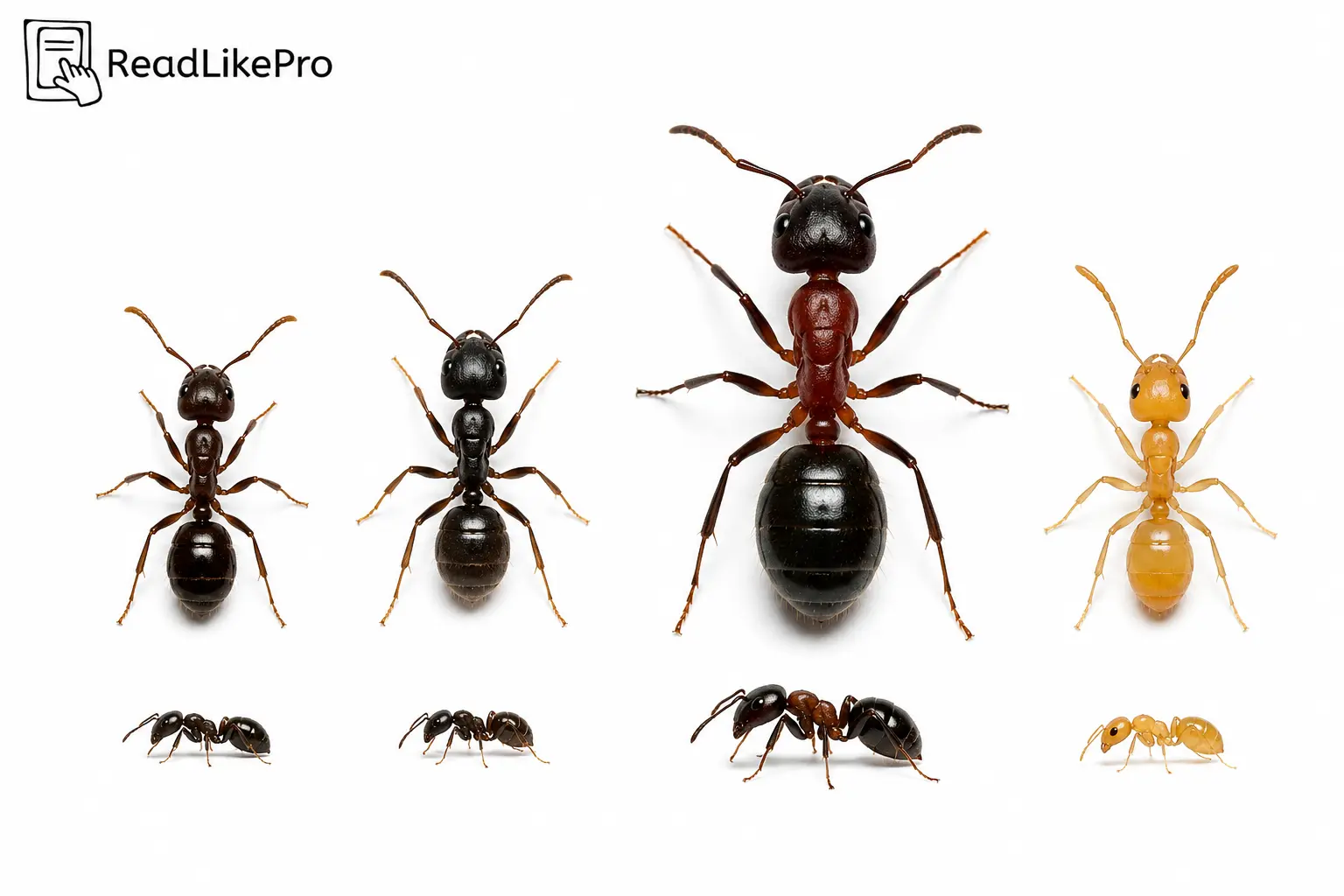
You don’t need a microscope, but it helps to know roughly what you’re dealing with, because the fix changes depending on the ant.
- Odorous house ants are the most common ones indoors. They’re tiny and dark, and they smell faintly like rotten coconut when you squish them. The tricky part is their colonies can have several queens, which makes them hard to wipe out.
- Pavement ants are small and usually come in through cracks in driveways, slabs, and foundation joints.
- Carpenter ants are the big ones, often reddish-black. They don’t eat wood, but they dig through it to build nests, so they’re the ones that can cause real damage to your home.
- Pharaoh ants are pale yellow to light brown and very small. Unlike most house ants, they live and breed indoors all year. They’re also the one type where a wrong move can multiply your problem instead of fixing it.
A simple kitchen test tells you a lot. Put a small dab of honey and a small dab of peanut butter on a piece of foil near a trail, then walk away and check back in half an hour. If the ants pile onto the honey, they’re on a sweet kick. If they mob the peanut butter, they want grease and protein. And if a real crowd shows up within 15 to 30 minutes, congratulations, you’ve found a live trail worth treating.
One thing worth mentioning: the same colony can flip its answer to this test a month later. A summer sugar craving often turns into a fall hunt for protein and fat, which is why a bait that worked in June sometimes gets ignored in September.
See sawdust-like shavings, hear a faint rustling in the walls, or spot winged ants indoors in spring? Treat it as carpenter ants for now and read the carpenter ant section further down before you do anything.
Ant or Termite? Settle It in Ten Seconds
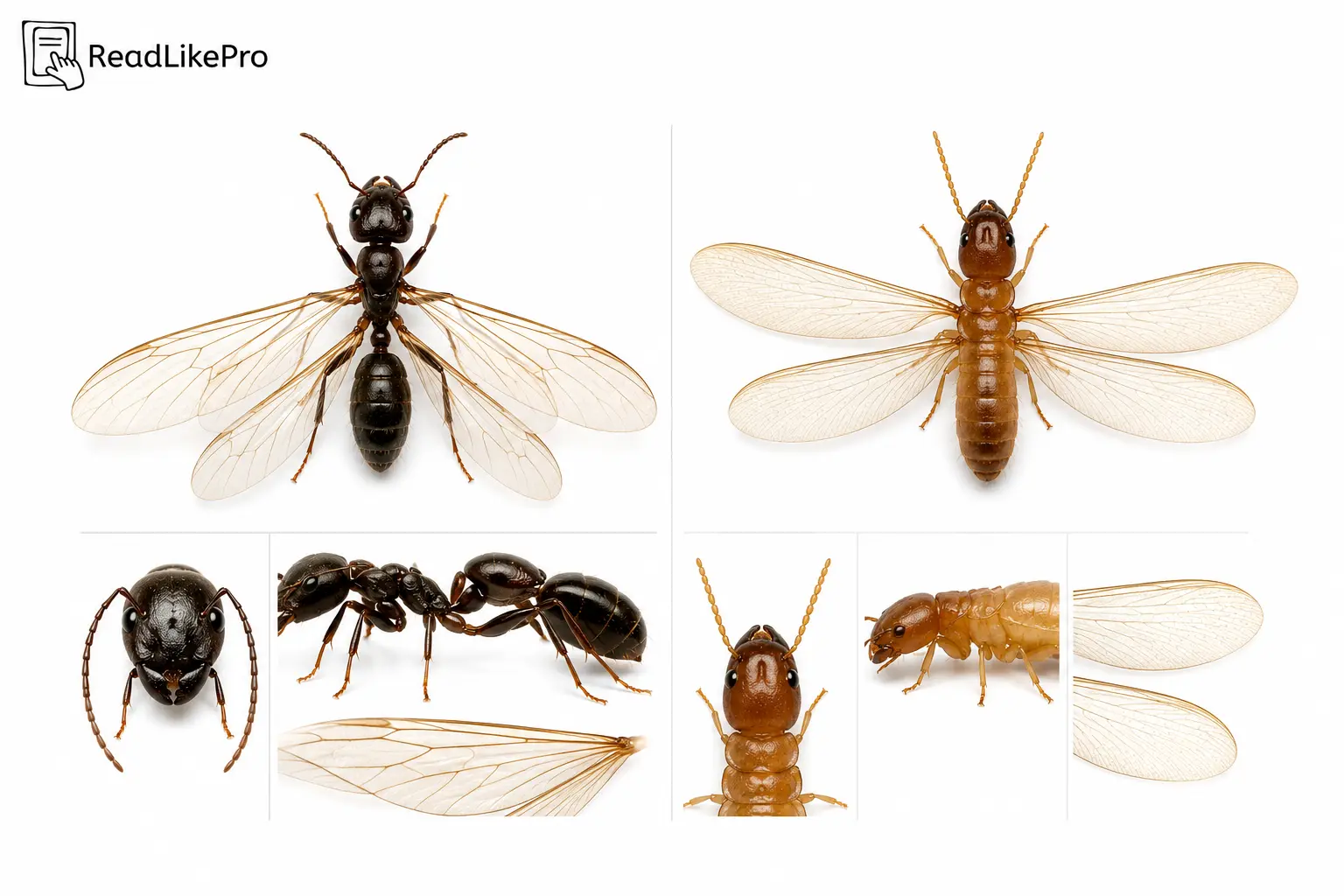
This mix-up costs people real money, so it’s worth its own quick check. Every spring, and sometimes again in fall, both ants and termites send out winged reproductives that swarm around windows and lights. One is a nuisance. The other eats your house. And they look close enough that plenty of homeowners guess wrong.
Three features tell them apart, no magnifying glass needed. University of Maryland Extension lays it out cleanly:
| Look at | Flying ant | Termite swarmer |
|---|---|---|
| Waist | Pinched, hourglass “wasp waist” | Straight, no waist, tube-like |
| Antennae | Bent, elbowed (like an L) | Straight and bead-like (like an I) |
| Wings | Front pair longer than back | Four wings, all equal length, pale |
One extra tell: a little pile of matching, shed wings on a windowsill or floor points to termites, since they drop their wings soon after swarming. If your gut says termite, don’t wait it out. That’s a same-week call to a licensed inspector, not a DIY project.
Step 2: Use Bait, Not Spray
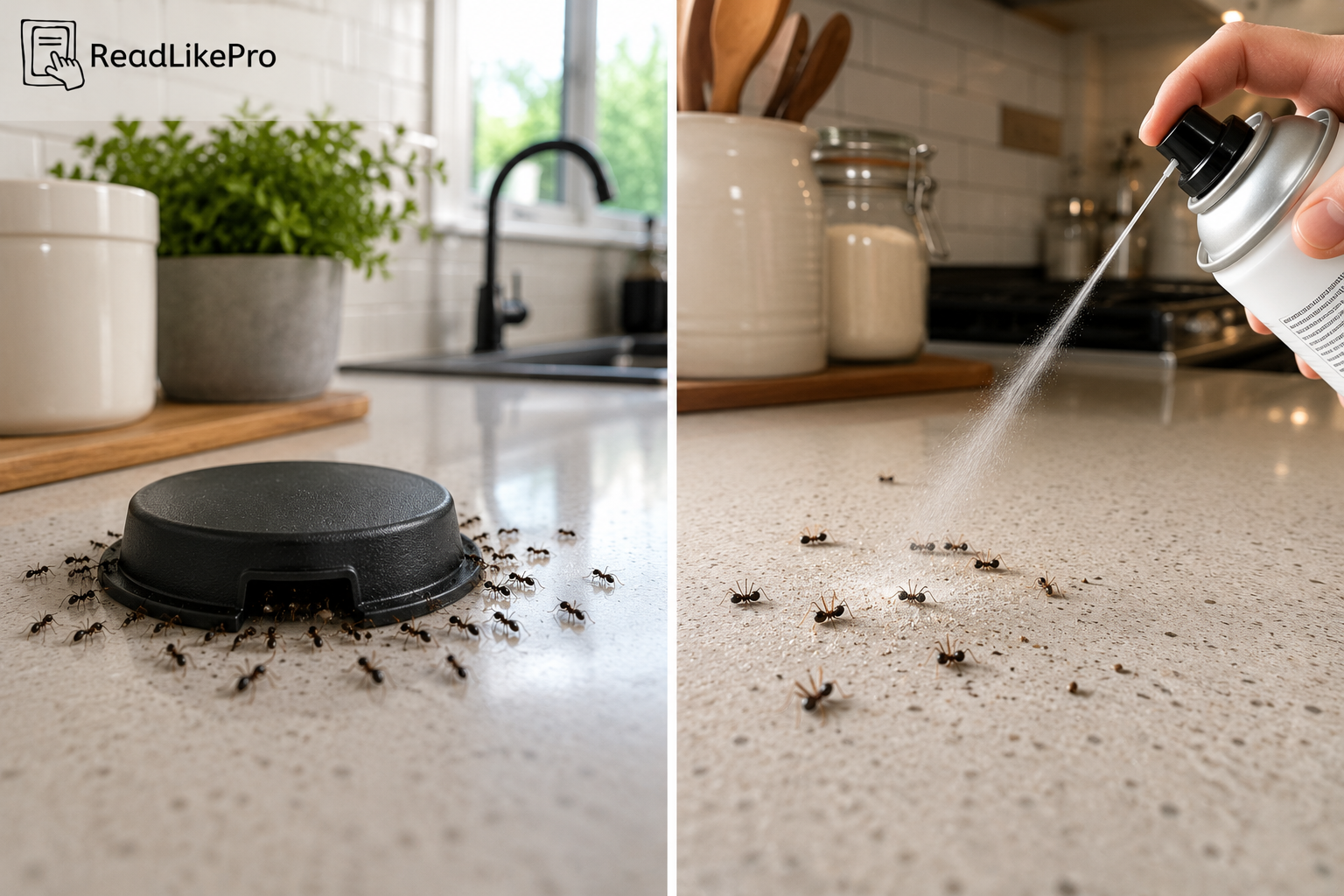
If you remember only one thing from this whole guide, make it this. Slow-acting bait beats spray for wiping out a colony, and it isn’t a close call.
Bait works because it’s slow. A worker picks it up, carries it back to the nest, and shares it with the queen and the young before it dies. Ohio State Extension explains this plainly: the whole point of baiting is to let the workers carry the poison home to the larvae and the queen, and because it acts slowly, it reaches the ants that keep the colony going. A fast-killing spray does the opposite. It kills the delivery ant before the package ever gets home.
How to bait the right way:
- Put bait stations or gel right on the active trail, not scattered around the room. You want the ants that are already walking past to find it.
- Don’t clean the trail first. Let them keep feeding on the bait.
- If you’re not sure what they like, put out both a sweet bait and a greasy or protein one. What they prefer changes with the seasons.
- Then leave it alone. It can take a few days to a few weeks to reach the queen, and you might see more ants at first as word spreads. That’s a good sign, not a bad one.
- Refill empty stations, and don’t spray any insecticide nearby, because it pushes ants away from the bait.
The hard part is waiting. People pull the bait after two days because “it isn’t working,” which is a bit like taking a cake out of the oven at ten minutes and saying the recipe failed. If you really can’t stand watching a trail on your counter while the bait does its slow work, there are fast ways to knock out the ants you can see without ruining the bait station. Our breakdown of what kills ants instantly covers the ones that hold up.
Which Bait Type for Which Situation
Walk down the pest aisle and the choices blur together. Here’s the plain-English version of what each form is good at:
| Bait form | Works best when | Keep in mind |
|---|---|---|
| Liquid or gel | Ants want moisture; small to medium trails on counters and baseboards | Dries out, so refresh it; the go-to for sugar-loving ants |
| Solid or granular | Outdoor trails, along the foundation, near entry points | Better for grease-and-protein feeders; keep it dry |
| Pre-filled stations | Homes with kids or pets; you want it tidy and enclosed | Slower to notice results, but safest and lowest-mess |
A trick that saves a lot of frustration: put out a sweet gel and a protein granule side by side for a day. Whichever one the ants swarm is your answer, and you stop guessing. If both get ignored, the colony probably isn’t foraging in that spot, so move your bait closer to where you see them coming in.
The One Mistake That Makes Ants Worse: Budding
This is the part most guides skip, and it’s the biggest warning here.
Some ants react to a repellent spray by splitting the colony and scattering, a behavior called budding (you’ll also see it called satelliting). Instead of one nest, you suddenly have several, spread across more of your home. Pharaoh ants are the classic example. Ohio State Extension lists spraying a repellent pesticide as a direct cause of budding, and Texas A&M’s urban entomology program says outright that liquid or dust repellent sprays shouldn’t be used indoors for this ant, because they usually cause budding and make everything worse.
So the rule is simple. If you’ve got tiny pale ants trailing along counters, plumbing, and baseboards, and especially if you live in an apartment or any heated building with a lot of units, don’t spray them. Bait only. A can of store-bought spray on a pharaoh ant colony is one of the few pest moves that can actually grow the problem.
Picture a small colony living behind a kitchen outlet. You spray the trail, kill the visible ants, and feel good about it. What you didn’t see is the colony reading that spray as a threat and quietly splitting into three, one behind the fridge, one under the bathroom sink, one in a wall two rooms over. A week later you’re not fighting one nest, you’re chasing three. That’s budding in a nutshell, and it’s exactly why apartment complexes dread this ant.
Odorous house ants can do something similar because of their multiple queens. If bait alone stalls out on those, the next step is a targeted non-repellent product or a call to a pro, not a repellent spray that sends them splitting apart.
Common Mistakes That Keep Ants Coming Back
Most failed ant jobs aren’t a bad product. They’re a small habit that quietly cancels out everything else. Here are the ones that come up again and again.
Wiping the trail clean before baiting. It feels right to scrub that line off the counter. But that scent trail is the road the workers use to reach your bait and carry it home. Clean it too early and the ants lose their path to the very thing meant to wipe out the nest. Bait first, clean later.
Spraying and baiting at the same time. People hedge their bets by laying bait, then hitting the trail with spray “just to be safe.” The spray repels ants away from the bait, so nothing gets carried back. Pick one. On a real infestation, that’s bait.
Putting bait everywhere except the trail. Bait tucked in a random corner does nothing. Ants have to walk over it. Place it directly on the active line, near the entry point where they’re coming in, not where you wish they’d go.
Quitting after two or three days. This is the big one. Bait is supposed to be slow, and you’ll often see more ants for the first few days as they swarm it. That’s the bait spreading through the colony, not failing. Pulling it early is the most common reason people say “bait didn’t work.”
Using the wrong bait flavor. A colony that ignored your sweet bait in July might attack a greasy one in October. Ant cravings shift with the season and the colony’s needs. If a bait sits untouched for a day or two, switch between sweet and protein instead of giving up.
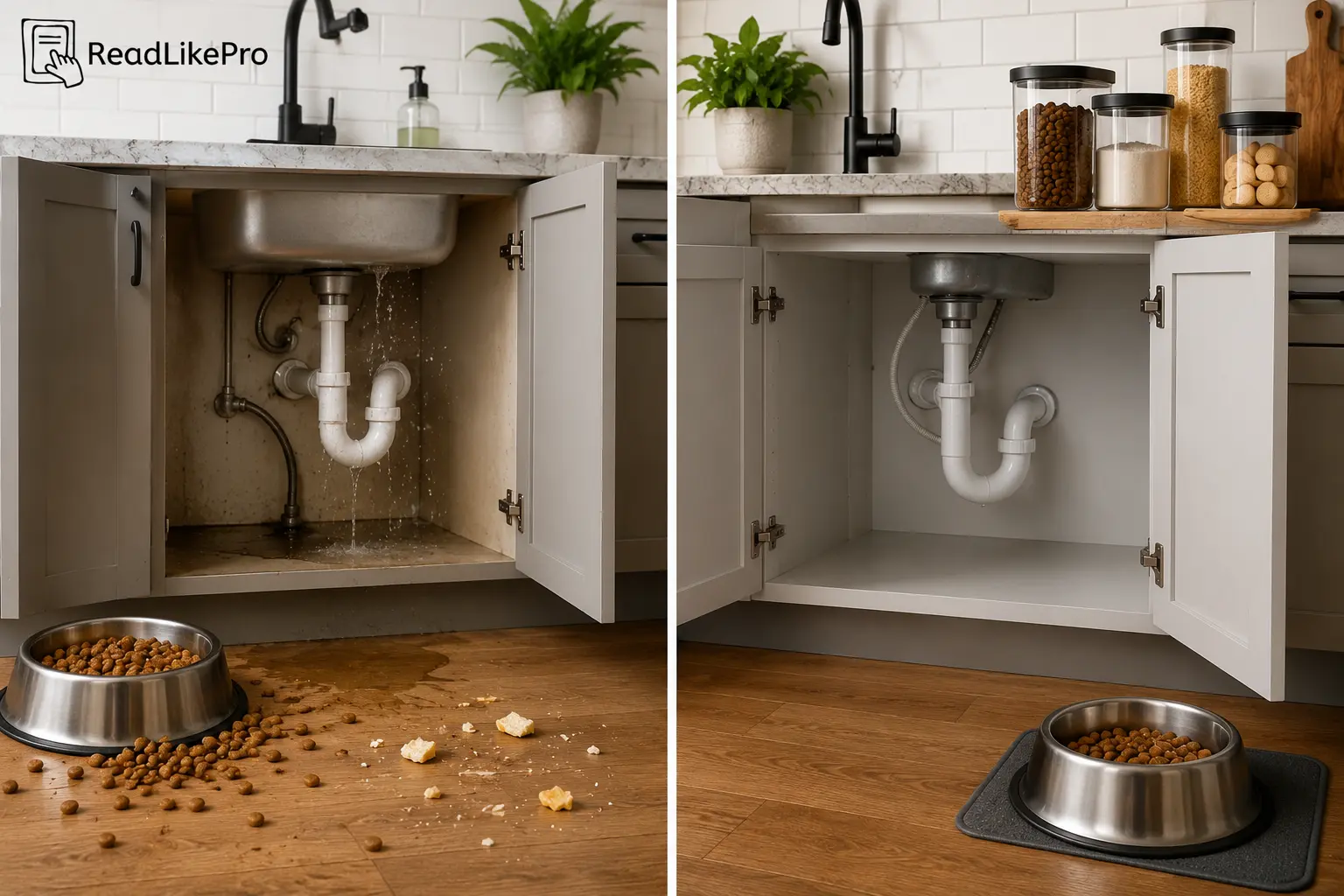
Fixing the food but ignoring the water. You seal the sugar, wipe the counters, and still see ants. Nine times out of ten there’s a moisture source you skipped: a slow drip under the sink, a sweating pipe, a damp bath mat, standing water in a plant saucer. Ants will keep coming for the water alone.
Sealing gaps with the wrong stuff. Expanding foam on its own is soft, and ants (carpenter ants especially) chew straight through it. Use it as backing if you like, but finish visible gaps with caulk or steel wool so there’s an actual barrier.
Treating pharaoh ants like regular ants. Worth repeating because it’s the costliest mistake here: those tiny pale ants split their colony when sprayed. If that’s what you have, no store spray, no matter how tempting. Bait only.
Step 3: Cut Off Their Water and Food
Bait clears out the colony. Prevention stops the next one from moving in, and this is where you win over the long run.
Moisture is the part people forget. Ants need water as much as food. Fix the boring stuff: a dripping outdoor faucet, a slow leak under the sink, condensation around the AC line, gutters spilling water against the foundation. Carpenter ants especially like wood that’s gone soft from moisture, so damp framing is both an invitation and a warning sign.
Then take away the food.
- Wipe up spills quickly, especially sweet ones like syrup, honey, and soda.
- Keep pantry sweets and pet food in sealed containers.
- Empty the trash regularly and use a can with a lid.
- Don’t leave pet bowls out with food overnight.
Your house doesn’t need to be spotless. You just need to close the buffet.
Step 4: Seal the Ways In
The EPA’s guidance on pest management keeps coming back to one plain fix: seal the cracks and gaps ants use to get inside. It’s cheap, it lasts, and it does more than any spray.
Walk around your home and caulk gaps around:
- Windows and door frames
- Spots where pipes, cables, and AC lines go through the wall
- Foundation cracks and gaps in the siding
- Weep holes and door thresholds
Outside, look for the bridges. A tree branch resting on the roof, a climbing rose against the wall, a firewood stack leaning on the siding, each one is a highway ants use to skip your foundation entirely. Trim the branches back. Pull the woodpile a few feet off the wall. Carpenter ants in particular love to stroll along a limb and step straight onto your house, so that overhanging branch you keep meaning to cut is doing more harm than you’d think. Damp mulch and leaf piles pushed up against the foundation are the other classic offenders; shift them out a foot or two and you’ve taken away a ready-made nest site.
When Ants Show Up: A Season-by-Season Playbook
Ant problems aren’t random. They follow the calendar, and knowing what’s coming lets you get ahead of it instead of reacting.
Spring is when it starts. As the ground warms, colonies wake up hungry and scouts start hunting for food, which is why that first kitchen trail so often shows up around March or April. This is also swarm season, so a cloud of winged insects near a window is worth the ten-second ant-or-termite check above. Best move now: bait early trails while colonies are still small, and walk your perimeter to caulk gaps before the rush.
Summer is peak season. Colonies are large, foraging is nonstop, and heat waves or dry spells push ants indoors looking for water, not just food. If you’re going to see a serious infestation, it’s usually now. Keep bait stations stocked, stay on top of spills, and watch damp spots like the area under the AC unit.
Fall brings a shift. As it cools, some ants switch from sweet cravings to fat and protein as they stock up, so a bait that worked in July might need swapping. A few species also start looking for a warm place to overwinter, which means more interest in wall voids and heated rooms.
Winter is quiet for most outdoor ants, but not all. If you’re still seeing steady trails indoors in January, that’s a strong hint the colony is living inside, in a wall or under the slab, rather than wandering in from outside. Indoor winter ants usually mean pharaoh ants or a carpenter ant satellite nest, and both are worth treating seriously rather than waiting for spring.
What Doesn’t Work (Or Barely Does)
The natural-remedy corner of the internet is loud, and a lot of it is only half true. Here’s the honest version.
Vinegar and cinnamon. These break up scent trails, so ants scatter for a bit and it looks like it worked. But entomologists quoted by Family Handyman and Consumer Reports are clear about the limit: the trails come back within a couple of hours, and the smell never reaches the colony. Fine for a quick wipe-down of the counter. Not a real fix.
Essential oils like peppermint, tea tree, and clove. Same deal. They keep ants away for a short while, then the smell fades and the ants come right back.
Contact sprays as your main weapon. They kill whatever they touch and feel satisfying for a day. But they never reach the nest, and on pharaoh ants and other budding types, they can backfire.
Bug bombs and foggers. Ohio State Extension notes these don’t reach hidden nests, and if the fumes do reach one, the ants often just move it somewhere else. You end up with a mess and the same problem in a new spot.
Diatomaceous earth. This one’s more useful than the oils. It’s a fine powder that dries out an insect’s outer shell, and a peer-reviewed review in the National Library of Medicine found it works on insects while staying low in toxicity for people and pets. The catch is that it only works dry, it works slowly, and it doesn’t lure ants in. Use it as a barrier in dry cracks and entry points, not as your main killer. Buy food-grade, spread a thin layer (thick piles just get walked around), and keep it away from damp areas.
Carpenter Ants: A Structure Problem, Not a Kitchen Problem
Carpenter ants get their own section because the stakes are higher. They don’t eat wood, but they carve tunnels through it to nest, and Penn State Extension points out that their shavings and tunnels often get mistaken for termite damage. Left alone in the right damp conditions, they can slowly weaken the wood in your home.
Signs worth taking seriously:
- Little piles of coarse shavings that look like sawdust
- A faint rustling inside the walls, usually at night
- Large winged ants showing up indoors in spring
- Reddish-black ants clearly bigger than your usual kitchen ants
Here’s how it usually plays out. Someone notices a few big black ants in the bathroom, shrugs, and squishes them. A couple of weeks later there’s a little cone of what looks like sawdust on the windowsill under the frame. That sawdust is the tell. Carpenter ants push their excavated wood out of the nest, so a fresh pile means an active gallery is somewhere close, often traced back to a main nest outside in a stump, a woodpile, or a chronically wet corner of the frame.
DIY bait can knock down a satellite nest. But if you’re seeing those shavings or you suspect a nest inside a wall, this is the one spot in the whole guide where I’d stop and call a licensed pro. The inspection alone is worth the money, because the difference between a nuisance and a structural bill comes down to catching it early.
DIY vs. Professional: What It Costs
Most ant problems are a DIY job. Knowing when to call someone saves money, and in the carpenter ant case, it can save your framing. Rough U.S. prices as of 2026 (for a number closer to your home and your situation, run it through our pest control cost calculator):
| Approach | Typical cost | Best for | Watch out for |
|---|---|---|---|
| DIY bait stations / gel | $8–$25 | Odorous house, pavement, most common trails | Needs patience; wrong bait type stalls it |
| DIY diatomaceous earth | $10–$20 | Dry cracks and entry points | Slow; useless when damp |
| Caulk + sealing supplies | $10–$30 | Long-term prevention | Costs time and effort, not much money |
| One-time pro treatment | $150–$350 | Stubborn or multi-room problems | Make sure they bait, not just spray |
| Recurring pest plan | $40–$80 / visit | Ongoing or large-property issues | Read the contract before signing |
| Carpenter ant / structural | $250–$600+ | Suspected wood nesting | Get the inspection no matter what |
Prices swing with your region and how bad the problem is, so treat these as planning numbers, not quotes. Ants sit at the cheap end of pest control, which is worth keeping in mind. Specialized pests cost a lot more, and bed bugs in particular can run into the thousands for a whole-home treatment. If it turns out the bugs in your bedroom aren’t ants at all, our guide on how to get rid of bed bugs fast is a whole different playbook, and catching them early is what keeps that cost down.
FAQ -How to Get Rid of Ants in the House
How do I get rid of ants permanently? “Permanently” is the wrong way to think about it, since ants live outside and will always test for a way in. What you can do is clear the current colony with bait, then close off the water, food, and gaps that made your place appealing. Do both and the ants come back rarely instead of constantly.
Why do I suddenly have so many ants when my house is clean? A clean house helps, but ants come in for moisture and shelter too, not just crumbs. They’ll also follow one tiny food source you never noticed, like a sticky spot behind the stove or residue in the recycling. A visible line usually means one scout found something and brought friends.
Does killing the ants I see make it worse? Squishing a few scouts is fine. The real risk is spraying repellent insecticide on budding-prone ants like pharaoh ants, which can split the colony and spread it. When you’re not sure, bait instead of spray.
How long does ant bait take to work? Usually a few days to a few weeks. You may see more ants at first as they crowd the bait, which is a good sign. Multi-queen colonies take longer, so leave the bait alone and let it work.
Are natural remedies like vinegar or peppermint oil worth trying? They scramble scent trails for a couple of hours, so they’re okay for a quick cleanup, but they don’t reach or kill the colony. Lean on them alone and the ants keep coming back.
When should I call a professional? Call when you suspect carpenter ants (sawdust-like shavings, rustling in the walls), when bait hasn’t made a dent after a few weeks, or when ants are spreading across several rooms or units. Structural risk and stubborn colonies are worth an expert’s time.
Is diatomaceous earth safe around pets? Food-grade diatomaceous earth is low in toxicity for mammals, but the fine dust can bother the lungs, so put thin layers in cracks and gaps rather than open piles, and keep pets away while you apply it.
The Short Version
Skip the reflex to spray first. Figure out the ant, put slow-acting bait on the active trail, and give it time to reach the queen. Fix the moisture and seal the gaps so the next colony has no reason to move in. Save contact sprays and foggers for almost nothing, since on the wrong ant they backfire. And if you spot shavings or think ants are nesting in a wall, get a pro to look before it stops being a kitchen problem and starts being a framing problem.
Sources
- U.S. Environmental Protection Agency — Ants and integrated pest management
- Penn State Extension — Carpenter Ants
- Ohio State University Extension (Ohioline) — Pharaoh Ant
- Texas A&M Urban and Structural Entomology — Pharaoh Ant
- National Library of Medicine — Diatomaceous Earth for Arthropod Pest Control
- University of Maryland Extension — Ants and Termites: How to Tell the Difference
- National Pest Management Association (PestWorld) — Ant identification guide

Baldeep builds and researches content sites full time. For ReadLikePro he
compiles home service pricing from contractor quotes, industry cost surveys,
and public data, then checks the numbers against more than one source before
publishing. He isn’t a licensed contractor, so every estimate here is a
research-backed range, not a quote for your specific job.


[…] not a subscription. If you’re seeing trails on the counter, the full DIY plan in our guide on getting rid of ants in the house will handle most colonies for under $20. Carpenter ants are the exception those nest in wood and […]