

Here’s something most homeowners don’t find out until it’s too late: old wiring doesn’t fail dramatically. It doesn’t spark, it doesn’t smoke every day, it doesn’t set off alarms. It just quietly deteriorates inside your walls — until one night it doesn’t.
Electrical fires that start from aging or overloaded wiring are responsible for nearly 45,000 home fires every year in the US, according to the NFPA. The majority happen in homes where nothing seemed wrong beforehand.
That’s the part nobody warns you about. You can have a home inspection done, get a clean report, and still be living with wiring that’s been running too hot for decades. Because a standard home inspection doesn’t open walls. It doesn’t test circuits under load. It checks what’s visible — and most wiring problems aren’t.
So if your home is more than 30 or 40 years old, or you’ve noticed any of the symptoms below, this is worth reading carefully.
After reviewing guidance from the NFPA, CPSC, ESFI, and multiple licensed electrical contractors, the same warning signs appeared consistently across every source: repeated breaker trips, burning odors, aluminum branch wiring, and ungrounded outlets. Those are the ones that show up in real inspection reports — not just checklists. Here’s what each one actually means.
What Is Electrical Rewiring?
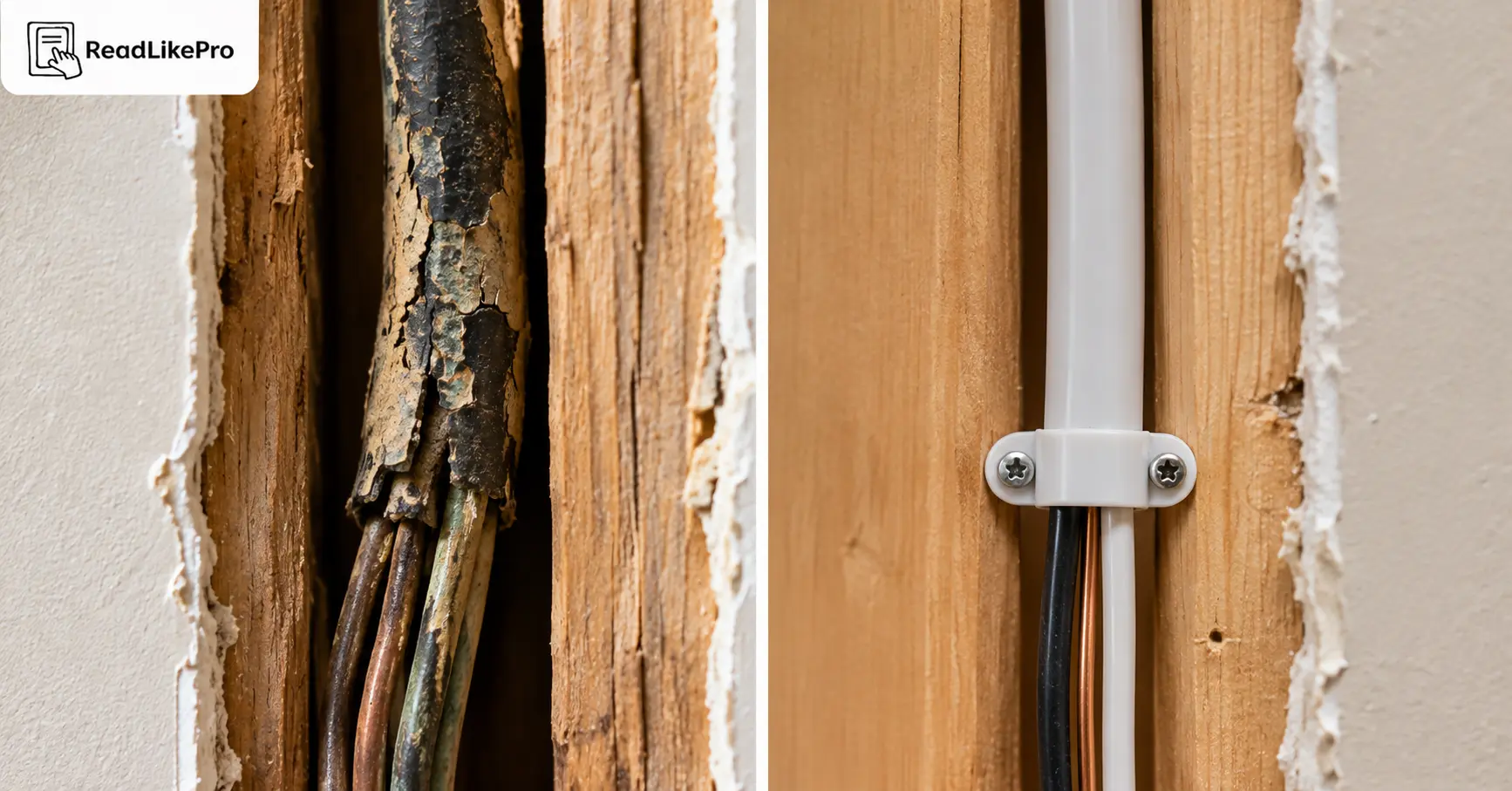
Electrical rewiring means replacing the cable that runs from your breaker panel to every outlet, switch, and light fixture in the house. It’s not the same as replacing an outlet or upgrading a panel — those are separate jobs. Rewiring addresses the wire itself: the copper (or aluminum) conductor and the insulation surrounding it that runs inside your walls, floors, and ceilings.
Two things make rewiring necessary over time: age and capacity.
The insulation on older wiring rubber, cloth, or early plastic — dries out and deteriorates. Copper wiring can last 50–70 years under normal conditions, but the materials surrounding it often don’t. On top of that, homes built before the 1970s were typically wired for 60-amp service. Modern households routinely demand 200 amps or more, running EV chargers, heat pumps, induction ranges, and a dozen always-on devices simultaneously.
That gap between what old wiring was built for and what it’s now being asked to carry is where electrical fires start.
According to research published by the National Fire Protection Association (NFPA), local fire departments responded to an estimated average of 44,880 home fires involving electrical failure or malfunction each year between 2012 and 2016. Those fires caused an average of 440 civilian deaths and 1,250 injuries annually, along with $1.3 billion in direct property damage per year.
Electrical distribution and lighting equipment — meaning wiring, outlets, panels, and fixtures — accounted for 50% of all home fires involving electrical failure or malfunction during that same period.
8 Signs Your Home Needs Electrical Rewiring
1. Circuit Breakers That Trip Repeatedly
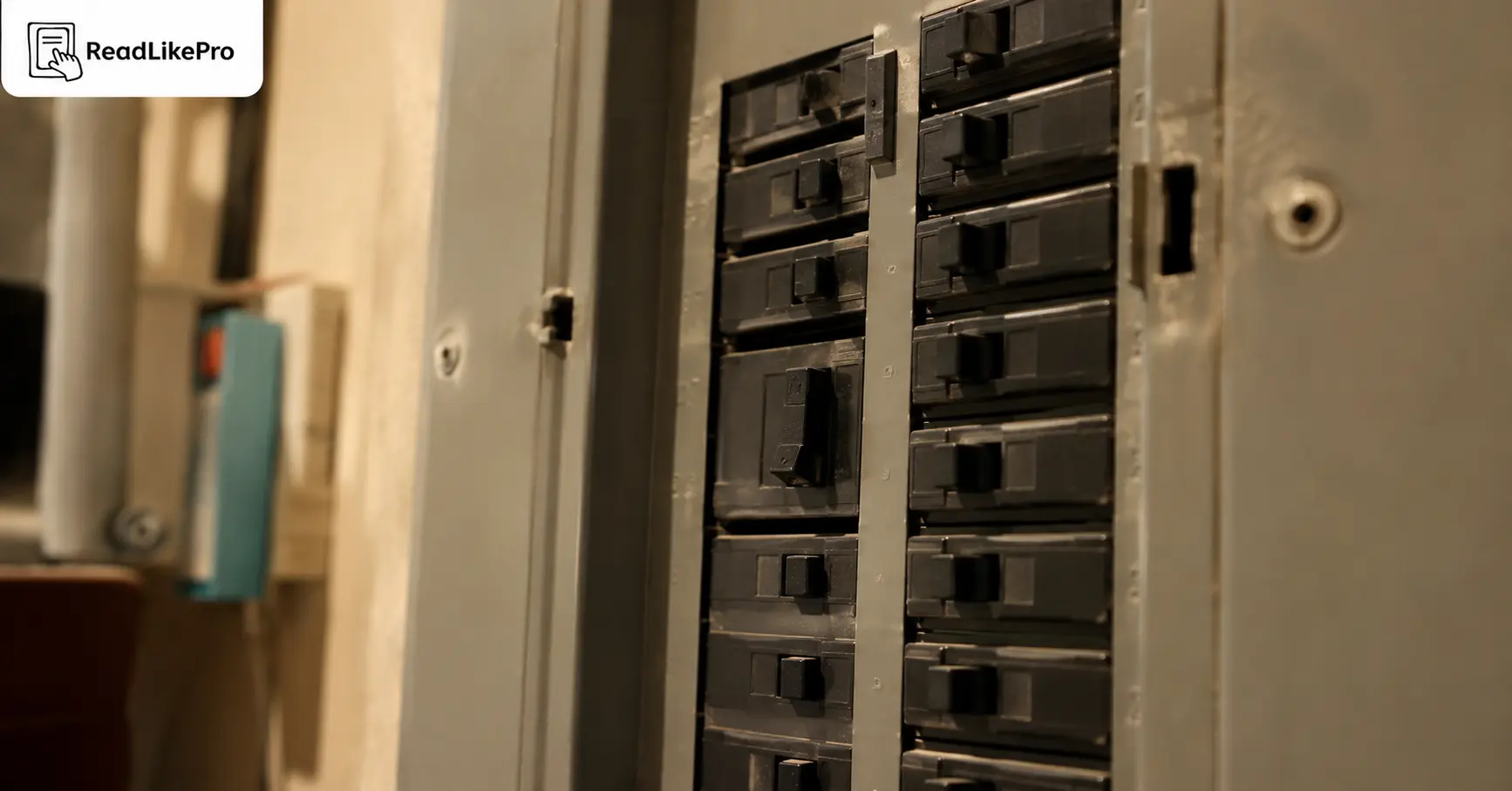
Tripping a breaker once in a while is normal. Every circuit has a rated ampacity, and if you push past it, the breaker does its job and shuts down the circuit. That’s expected.
What’s not normal: resetting the same breaker regularly, or finding you can’t run two kitchen appliances at the same time without losing power. If you know which breaker to go for without even checking the panel, that’s your sign.
What it means: The circuit is hitting or exceeding its capacity on a consistent basis. Each time that happens, the wiring runs hotter than it should. Over time, that heat degrades insulation and increases the risk of an arc fault — an unintended discharge of electrical current between conductors that can ignite surrounding materials.
The NFPA report linked above notes that arc faults are responsible for the majority of home fires involving electrical failure or malfunction, and that aging systems in older homes are a documented source of arc faults “either through normal wear and tear or because the systems cannot accommodate the greater demands of modern appliances.”
Consistent tripping in an older home usually signals that the circuit doesn’t have enough capacity for how you’re living — and that the wiring behind that circuit has been running hot for a while.
2. Flickering or Dimming Lights Across Multiple Rooms
A single bulb that flickers probably just needs tightening. That’s not what to watch for here.
If lights dim noticeably when a large appliance kicks on — the AC starts, the dryer runs, the dishwasher fills — that’s a voltage drop issue coming from inside the system. When it happens across multiple rooms or circuits, the problem is deeper than one loose bulb.
What it means: Voltage fluctuations across circuits are often a sign of overburdened wiring, a failing connection, or deteriorating insulation. In older homes with aluminum branch circuit wiring, this can also indicate that connection points are loosening — a known failure mode in aluminum-wired homes.
The NFPA’s electrical fires report specifically notes that short circuits from defective and worn insulation accounted for 14% of civilian deaths in home electrical fires during the study period. Flickering lights across circuits can be an early indicator of exactly this condition.
3. Burning Smell Near Outlets, Switches, or the Panel
This one doesn’t require investigation it requires action.
A burning smell at an outlet, switch plate, or electrical panel means heat is already being produced inside that circuit. That heat is coming from somewhere: a degraded connection, melting insulation, an overloaded wire, or a component that has already begun to fail.
What it means: Discolored outlet covers the brownish or blackish staining you sometimes see around the edges of a faceplate — are physical evidence that heat damage has already occurred. If the smell is present with no visible discoloration, the damage is happening inside the wall where you can’t see it.
The U.S. Consumer Product Safety Commission (CPSC) lists the smell of burning plastic at outlets or switches as a sign of a wiring problem that requires evaluation by a qualified electrician. The CPSC is explicit: “Do not try to do it yourself. You could be electrocuted, or you could make the problem worse.”
If this is happening in your home, call a licensed electrician the same day.
4. Outlets with Only Two Prongs
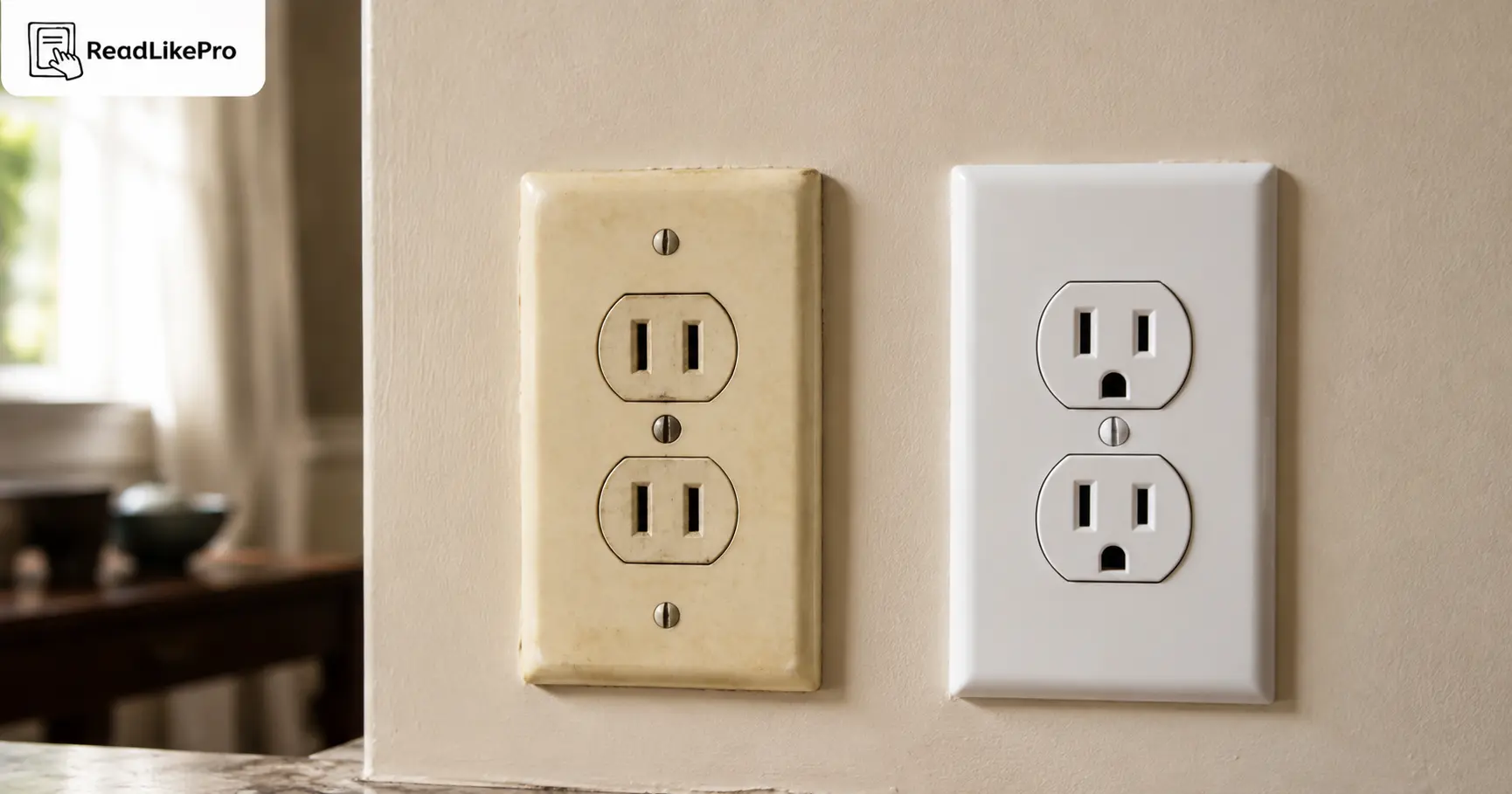
Walk through your home and look at the outlets. Two slots or three?
If most of your outlets are the old two-slot style, your home has ungrounded wiring — a system that was standard before the early 1960s and has not been installed new in residential construction since. The third prong (the round one at the bottom) connects to a ground wire. That wire gives excess current a safe path to the earth during a fault or surge, instead of routing it through the device or through a person.
What it means: Ungrounded wiring means your home lacks a basic safety layer that all modern devices assume exists. Surge protectors don’t work correctly without a ground. AFCI and GFCI protection is limited. Smart home devices can behave unpredictably.
A common workaround homeowners use — swapping the physical outlet cover for a three-prong version without actually grounding the circuit — looks correct but changes nothing about the safety of the wiring behind it.
According to the CPSC, older ungrounded wiring systems are among the most common hazards found during residential electrical inspections. The only real fix is proper rewiring with grounded circuits run back to the panel.
5. Outlets or Switch Plates That Feel Warm to the Touch
Put the back of your hand against an outlet faceplate. Not one with something currently plugged in — an idle one. It should feel like the room temperature. Nothing more.
If it’s noticeably warm, that warmth is coming from inside the wall. An active circuit under load carries some warmth at the device itself, but an idle circuit should not generate heat on its own. Warmth at an idle outlet almost always means a connection inside that box has deteriorated enough to generate resistance — and resistance generates heat.
What it means: This is one of the warning signs the CPSC identifies in its aluminum wiring advisory as indicating a potentially failing connection. The same applies to warm switch plates. If a switch plate is noticeably warm after a light has been on for a while, that circuit needs a professional evaluation.
6. Extension Cords Running as Permanent Solutions
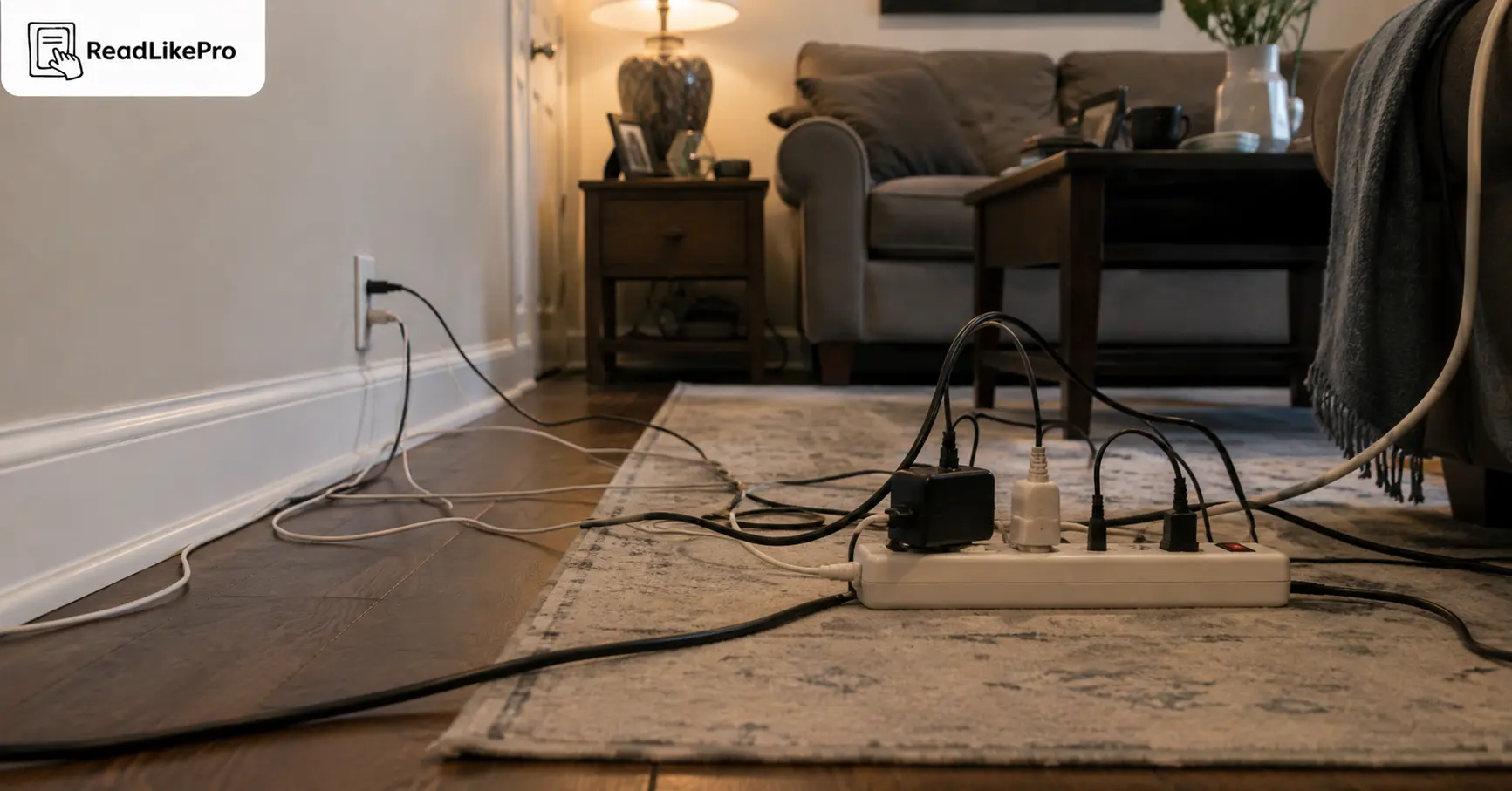
Extension cords are designed for temporary use. They have ampacity ratings — limits on how much current they can safely carry — and those ratings assume the cord will be used occasionally, not continuously under sustained load.
Running a space heater, refrigerator, or window AC unit on a long extension cord month after month causes the cord to degrade under load. Cords run under rugs trap heat. Cords pinched by furniture or doors develop damage to the insulation.
What it means: If extension cords and power strips have become a permanent fixture in your home — plugged into the same outlets, in the same spots, for months — the home doesn’t have enough outlets for how you actually live. That’s an infrastructure problem, not a cord problem. The solution is adding dedicated circuits, not running more cords.
The NFPA’s electrical fires research notes that arc faults from damaged conductors and connectors are a leading factor in electrical home fires, and specifically calls out “even electrical cords running under carpets” as capable of generating enough heat to produce an arc fault.
7. Aluminum Branch Circuit Wiring (Built 1965–1973)
This sign requires knowing a bit of history.
A copper shortage in the mid-1960s caused residential builders to switch from copper to aluminum for branch circuit wiring — the wiring that runs from the panel to outlets and switches. This was legal and common practice between roughly 1965 and the mid-1970s.
The problem: aluminum behaves differently from copper under electrical load. It expands and contracts more with heat cycling, which gradually loosens connections at outlets, switches, and junction boxes over time. It also oxidizes at connection points in a way that increases resistance — and increased resistance means heat.
What the data says: A national survey conducted by the Franklin Research Institute for the U.S. Consumer Product Safety Commission found that homes built before 1972 and wired with aluminum are 55 times more likely to have one or more wire connections reach “Fire Hazard Conditions” compared to homes wired with copper. The CPSC defines fire hazard conditions as receptacle cover plate mounting screws reaching 149°C (300°F), sparks emitting from receptacles, or charring around the receptacle.
How to check: Look at the wiring visible in your basement, attic, or garage. Copper is reddish-brown. Aluminum is silver-gray. The outer jacket of aluminum cable is typically printed every few feet with “AL” or “Aluminum.” If you see “CU-clad” or “Copper-clad” alongside “AL,” that’s a different product and not covered by these concerns.
If your home has aluminum branch circuit wiring, the CPSC recommends a permanent repair. Three CPSC-approved options exist: complete replacement with copper wire, the COPALUM crimp connector method (pigtailing at every connection), or AlumiConn connectors. Complete rewiring with copper is the most thorough option. All three require a qualified electrician.
8. Home Is Over 40 Years Old with No Wiring Updates
No flickering. No smell. Everything works.
This is, counterintuitively, the situation that most warrants getting an electrical inspection.
Old wiring fails silently. Rubber-insulated wiring from the 1940s and 1950s (and earlier) doesn’t announce when its insulation begins to crack away from the conductor. Knob-and-tube wiring — common in homes built before the 1940s — has no ground wire at all and uses cloth and rubber insulation with a limited service life. Many knob-and-tube systems have also been improperly modified over decades by previous owners who added circuits, changed appliances, or worked around failed components without permits or professional oversight.
What it means: The NFPA’s research on home electrical fires notes that aging electrical systems in older homes are a documented source of arc faults. The ESFI recommends that all electrical systems be professionally inspected if the home is older than 40 years, has had major renovations, or has had large appliances added — even in the absence of visible warning signs.
If your home is over 40 years old and has never had its wiring professionally evaluated, the right move is scheduling an inspection before a problem develops, not after.
Wiring Types at a Glance
| Wiring Type | Era Common | Key Characteristics | Fire Risk Level | What to Do |
|---|---|---|---|---|
| Knob-and-tube | Pre-1940s | No ground wire, cloth/rubber insulation | High (especially if modified) | Full inspection; likely full rewiring |
| Early rubber-insulated | 1940s–1960s | Copper, but brittle insulation over time | Moderate–High | Inspection; rewire if insulation deteriorated |
| Aluminum branch circuit | 1965–mid 1970s | Expands/contracts, oxidizes at connections | High (55× copper risk per CPSC) | CPSC-approved repair or full rewiring |
| Modern copper (NM-B) | 1970s–present | Copper with plastic sheathing, grounded | Low if properly installed | Routine inspection every 10 years |
Electrical Rewiring Cost: What Homeowners Actually Pay (2026)
Cost varies based on home size, wall type, accessibility, and local labor rates. For a quick personalized estimate, use the Electrical Cost Calculator it covers rewiring, panel upgrades, EV charger installation, and more. Here’s a general breakdown based on data from Angi, Fixr, and SoFi:
| Home Size | Estimated Rewiring Cost |
|---|---|
| Under 1,000 sq ft | $3,000 – $8,000 |
| 1,000 – 1,500 sq ft | $7,800 – $13,000 |
| 1,500 – 2,500 sq ft | $12,000 – $20,000 |
| 2,500 – 3,500 sq ft | $18,000 – $30,000 |
Additional costs to factor in:
- Panel upgrade (if needed): $1,500 – $3,000 for a 200-amp panel
- Permits and inspections: $200 – $900 depending on municipality
- Drywall repair: Adds roughly 25–30% to total project cost if walls need to be opened
- Per-outlet additions: $100 – $185 per new outlet or switch
Electrician labor: Licensed electricians charge $50 – $100 per hour nationally, according to Angi. Electricians typically estimate roughly one hour of labor per 100 feet of wire.
Timeline: Most rewiring projects take 3–10 days depending on home size and complexity. A straightforward rewire of a 1,500 sq ft home with attic and basement access typically falls in the 5–7 day range.
One cost-saving opportunity: If a kitchen renovation, bathroom remodel, or addition is already planned, scheduling rewiring at the same time significantly reduces total cost — walls are already open, and drywall repair work overlaps.
Do You Need a Licensed Electrician?
Yes — every time, for every part of this work.
Why permits matter: Electrical rewiring requires permits pulled before work begins and inspections after. Work that’s permitted and inspected creates a record that the job was done to current National Electrical Code standards. Work done without permits can create problems with homeowner’s insurance claims if the wiring is later involved in a fire or damage event. It also becomes a disclosure issue when you sell the property.
Insurance implications: Some insurers actively ask about the age and condition of wiring when underwriting a policy. Homes with active aluminum branch circuit wiring or knob-and-tube wiring can face significantly higher premiums — or be declined coverage entirely — depending on the insurer.
For buyers: A standard home inspection is a visual survey. Inspectors are typically not licensed to open junction boxes, pull panels, or trace individual circuits. If you’re purchasing a home that’s more than 30 years old, asking for a dedicated electrical inspection from a licensed electrician — in addition to a general home inspection — is a reasonable due-diligence step. A dedicated electrical inspection typically costs $150 – $300.
Quick-Check: Signs That Warrant an Electrician Call
| Sign | Urgency |
|---|---|
| Burning smell at outlet or panel | Same day — do not delay |
| Warm outlet or switch plate | Within the week |
| Discolored or scorch-marked outlet covers | Within the week |
| Repeated breaker trips on same circuit | Schedule soon |
| Flickering lights across multiple rooms | Schedule soon |
| Two-prong outlets throughout the home | Schedule inspection |
| Aluminum branch circuit wiring confirmed | Schedule inspection |
| Home over 40 years old, no prior inspection | Schedule inspection |
Frequently Asked Questions About Electrical Rewiring
What does electrical rewiring involve, exactly?
Rewiring means replacing the cable that runs from your breaker panel to every outlet, switch, and light in the house. A licensed electrician strips out the old wiring and runs new cable throughout the home — typically through existing wall cavities using the attic, basement, or crawl space for access. In many cases, walls don’t need to be fully opened. The project also includes replacing outlets and switches, installing GFCI and AFCI protection where required by code, and scheduling a final inspection with your local building department.
How is rewiring different from a panel upgrade?
These are separate jobs. A panel upgrade replaces or expands your breaker box and gives you more electrical capacity. But if the wiring inside your walls is old, deteriorated, or aluminum, a new panel doesn’t address any of that. An electrician can assess both and determine which you actually need. In many older homes, both are needed at the same time.
Can I stay in the house while rewiring is happening?
Usually yes. Electricians typically work section by section, keeping power available in the areas they’re not actively working on. For a full rewire, expect some rooms to be without power on certain days. Discuss the project schedule with your contractor before work begins so you know what to expect.
Does homeowners insurance cover the cost of rewiring?
Generally no. Insurance covers sudden damage, not the cost of upgrading aging infrastructure. However, updated wiring can affect your premiums. Homes with aluminum branch circuit wiring or knob-and-tube wiring can face meaningfully higher insurance costs — or difficulty getting coverage at all — until the wiring is addressed.
How long does residential wiring actually last?
Copper wiring installed correctly can last 50–70 years or longer. The insulation surrounding the conductor typically degrades faster than the wire itself, which is why the age of the home matters as much as the material. Aluminum branch circuit wiring from the 1965–mid 1970s era carries a higher risk at connection points regardless of overall age, per CPSC research.
Is knob-and-tube wiring automatically dangerous?
Not automatically, but it needs a thorough professional evaluation. Knob-and-tube wiring has no ground wire, cannot safely support modern three-prong devices, and uses insulation materials that deteriorate badly over time and with heat exposure. A significant issue with many knob-and-tube systems is that they’ve been improperly modified over decades — previous owners added circuits, extended runs, or replaced components without permits. Many insurers are now unwilling to cover homes with active knob-and-tube wiring at standard rates.
What’s the difference between rewiring and adding circuits?
Adding circuits means running new cable from the panel to new outlet or appliance locations. Rewiring means replacing the existing cable throughout the home. If your panel is modern and your existing wiring is in good shape but you need more outlets in specific rooms, adding circuits may be sufficient. If the underlying wiring is deteriorated or outdated, adding circuits to that system doesn’t make it safer.
How do I find a qualified electrician for rewiring work?
Look for a licensed master electrician or licensed electrical contractor in your state. Ask directly whether they pull permits and schedule inspections for rewiring jobs — if a contractor offers to skip permits to save time or money, that’s a reason to walk away. Ask for references from homeowners who had full rewires completed. Your state licensing board is the correct place to verify credentials before hiring.
This article is for general informational purposes only. Always hire a licensed, permitted electrician for electrical inspections and rewiring work. Requirements and costs vary by state and municipality.

Baldeep builds and researches content sites full time. For ReadLikePro he
compiles home service pricing from contractor quotes, industry cost surveys,
and public data, then checks the numbers against more than one source before
publishing. He isn’t a licensed contractor, so every estimate here is a
research-backed range, not a quote for your specific job.