
You find one ant on the counter. Then a couple more by the trash. Grab a paper towel and there’s already a thin line of them running from a gap in the baseboard to a crumb near the stove. And the question that pops into everyone’s head is the same one: what kills ants instantly?
Here’s the part that changes how you handle it. The ants you can see are only about 5 to 10 percent of the colony. The rest — the queen, the eggs, thousands of workers — sit hidden in a wall or out in the yard. So a few things drop the ants on your counter within seconds, but almost nothing kills the whole colony that fast. That gap is the reason they keep marching back a day after you thought you’d won.
So this guide splits them apart. The stuff that kills on contact, the stuff that quietly takes out the nest over a few days, and an honest read on when a five-dollar kitchen fix does the job versus when you should just call someone. No miracle claims here.
Quick note on the word “instant,” because it trips people up. There’s instant as in seconds — soapy water dropping an ant on the spot. And there’s instant as in finally, the problem’s gone — which is really a three-to-seven-day job with bait. People go looking for the first kind when they really need the second. Both are covered below, just don’t confuse one for the other.
For what it’s worth, the numbers and safety notes below are pulled from the National Pesticide Information Center’s fact sheets and university extension research, not recycled from other ant blogs. When a figure shows up (like the fact that boiling water only wipes out around 60 percent of a treated mound), the source is linked so you can check it.
Why Ants Keep Coming Back
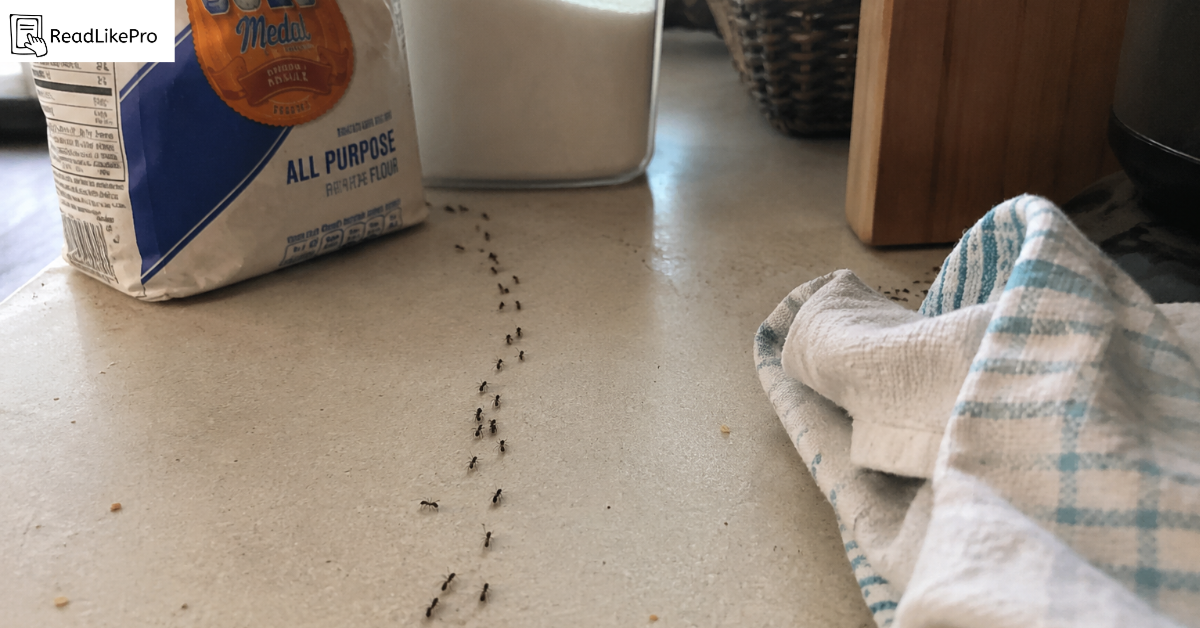
That 5-to-10-percent number is worth sitting with for a second, because it explains almost every failed ant-killing attempt. When ants are streaming across your floor, you’re seeing the foragers, the ones out scouting for food. The queen, the eggs, and the bulk of the workforce stay tucked away somewhere you can’t reach — a wall void, under the slab, out in the yard.
So a spray that wipes out every ant on the counter feels like a win, but the colony hasn’t been touched. It’ll send fresh scouts within a day or two, and you’re back to square one. That loop of kill, wait, repeat is where people lose weeks.
Anything that kills on contact deals with the symptom. Anything that gets carried back to the nest deals with the source. Usually you want both, and the order you do them in matters, which I’ll get to.
What Kills Ants Instantly (On Contact)
These are the fast options. Good for visible ants, trails, and that stomach-drop moment when the kitchen floor is suddenly moving. None of them reach the colony, so keep that in mind.
Soapy Water
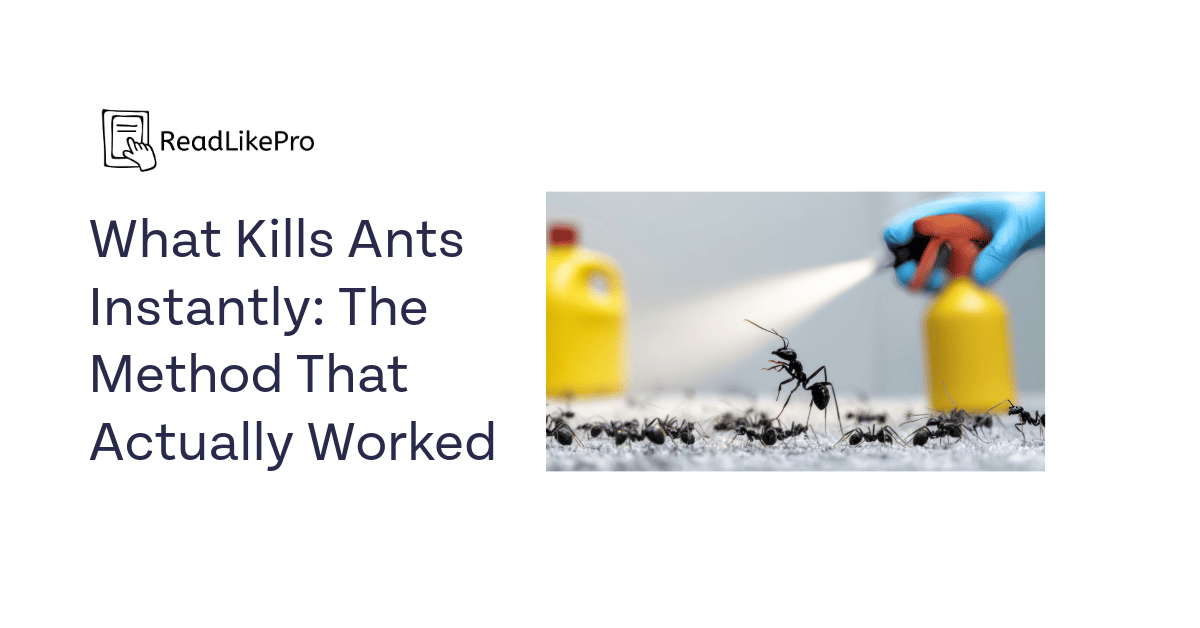
Dish soap and water is the most underrated quick fix in the house. A tablespoon of dish soap in a spray bottle of water, shake it, spray any ant you see.
It kills fast, and not because of any poison. Ants breathe through tiny holes along their bodies called spiracles. Soap breaks the water’s surface tension, coats the ant, plugs those holes, and strips the waxy layer that keeps it from drying out. Between suffocating and dehydrating, the ant is done in seconds.
Wiping the trail down afterward pulls up the pheromone scent ants leave to steer each other toward food, so fewer show up next time. Cheap, safe around most surfaces, fast. It just won’t do a thing to whatever’s back in the nest.
Boiling Water (Outdoors Only)
If you can actually see the mound or nest opening outside, boiling water poured straight in will kill a lot of what it touches. Water at a rolling boil sits around 212°F, and ants can’t survive anywhere near that.
Don’t count on it wiping out the colony, though. The extension research on this is oddly precise. Oklahoma State University’s fire-ant program found that about three gallons of boiling water per mound eliminates roughly 60 percent of treated mounds. The rest live through it and need a second round, mostly because the water cools as it works down the tunnels and never reaches the deep chambers where the queen sits.
A few things to watch. Never indoors — burns are one risk, warped flooring and cracked tile are another. Keep it off any grass or plants you’d like to keep, because it’ll cook those too. And carry the pot carefully. It’s a fine outdoor tool and a terrible indoor one.
Store-Bought Contact Sprays
Aerosol ant sprays knock ants down in seconds by hitting the nervous system. For instant kill on visible ants, they do the job.
There’s a real downside, though, and it catches people off guard. Spraying a visible trail indoors can make things worse. Some species react to the threat by budding, where the colony splits and scatters into new nests. Kill the ants you sprayed, wind up with two colonies instead of one. That’s why a lot of pros skip the spray indoors and go straight to bait the moment they see an organized trail.
What Eliminates the Colony (Give It a Few Days)
This is the half that actually fixes things. None of it is instant, and that slowness is the whole reason it works, because the ants carry the product home before it kills them.
Borax (or Boric Acid) Bait
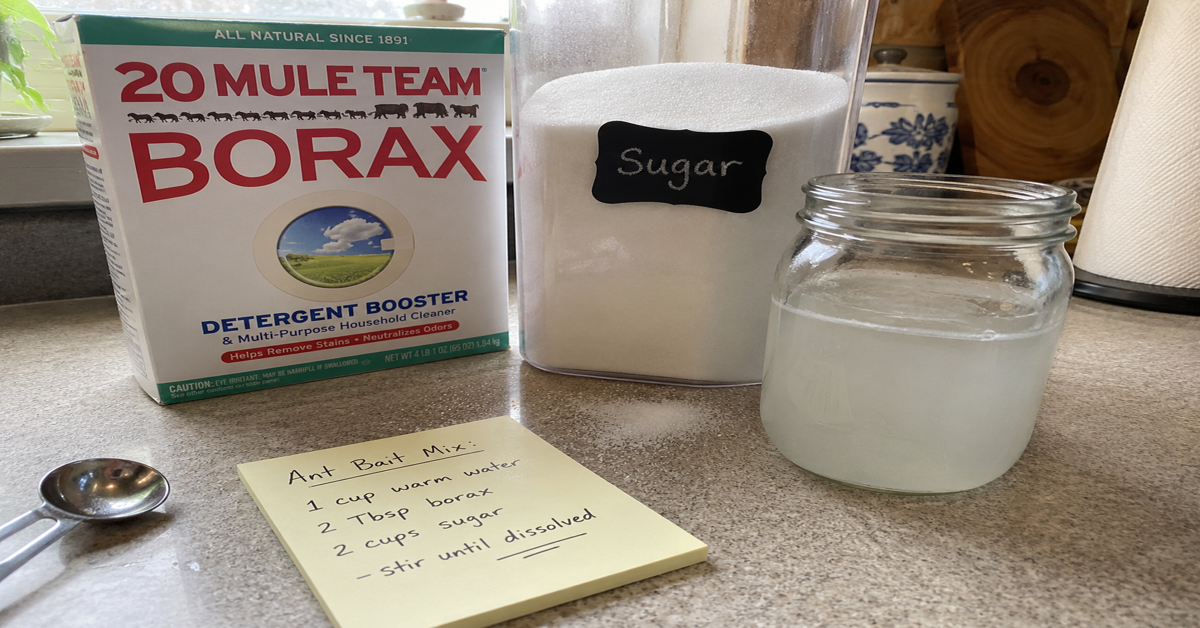
Borax and boric acid are the old reliables of DIY colony control. You mix a little into something sweet, the foragers eat it and haul it back, and it poisons the colony slowly from the inside, queen included.
The slowness is deliberate. Per the National Pesticide Information Center, boric acid kills insects that eat it by disrupting their stomach and nervous system, and it can also scratch and damage their outer shell. Because it works gradually, the workers live long enough to spread it around the colony before they die off. Boric acid products have been registered for use in the U.S. since 1948, so none of this is new or experimental.
Basic recipe: one part borax to about three parts sugar, or mix it into a little peanut butter, then dab it onto a scrap of cardboard and set it right on the trail. And then leave it be. That’s the part people struggle with, because you’ll see more ants swarm the bait at first, which looks alarming but is exactly what you want. Clean it up too early and you’ve broken the whole thing.
One safety point worth taking seriously. Boric acid is low-toxicity for adults through skin contact, but it’s not something to leave lying around kids or pets. NPIC notes infants are more sensitive to it, and there have been serious poisonings from swallowing it. Put baits where small hands and curious dogs simply can’t get to them.
Pre-Made Gel and Liquid Baits
If mixing your own sounds like a hassle, commercial gels and liquid stations run on the same carry-it-home idea with the dosing already worked out. They tend to be more dependable than homemade bait because the active ingredient and its concentration are dialed in for you.
Gel baits usually show the sharpest turnaround, often inside 24 hours, going from ants everywhere to almost none. Liquid stations move slower but tend to close out a job once a gel stalls. For most kitchen and pantry situations, bait is the single most effective thing you can do without calling anyone.
Diatomaceous Earth
Diatomaceous earth (DE) is a fine powder made from fossilized algae. It isn’t a poison, and it definitely isn’t instant. Per the National Pesticide Information Center, DE kills insects by absorbing the oils and fats out of the waxy cuticle on their shell, which dries them out, and its microscopically sharp edges speed that along.
Two things decide whether it works for you. First, buy food-grade, not pool-grade. The NPIC fact sheet notes the FDA lists diatomaceous earth as “Generally Recognized as Safe,” but that only covers food-grade. Pool-grade gets heat-treated into a crystalline form that’s dangerous to breathe. Second, it only works dry. Get it damp and it stops doing anything, which makes it useless in the exact wet spots (under the sink, along a damp foundation) where ants like to travel.
Lay a light line across entry points and dry trails, keep the dust away from anyone’s face, and reapply once it gets wet. Think of it as a slow barrier, not a quick kill.
What About Vinegar, Cinnamon, and Citrus?
These come up in every ant thread online, so let’s be straight about them. Vinegar, lemon juice, cinnamon, coffee grounds — they mostly work as deterrents, not killers. What they do is scramble or mask the scent trails ants follow, which can slow an invasion or push the line to reroute.
Handy for keeping ants out of a clean area, or for wiping a counter so a trail goes cold. Just don’t expect them to take out a colony. Determined ants tend to find a way around a scent barrier inside a day or two. Use these for upkeep, not treatment.
Instant vs. Permanent: A Quick Comparison
| Method | Speed | Kills colony? | Best for |
|---|---|---|---|
| Soapy water | Seconds | No | Visible ants, wiping trails |
| Boiling water | Seconds | Partly (~60% of mounds) | Outdoor nests only |
| Contact spray | Seconds | No | Visible ants (avoid on indoor trails) |
| Borax/boric acid bait | 3–7 days | Yes | Indoor colony elimination |
| Gel/liquid bait | 1–7 days | Yes | Most kitchen infestations |
| Diatomaceous earth | Days | Slowly | Dry entry points, barriers |
| Vinegar/cinnamon/citrus | N/A | No | Deterrent and prevention |
The Sequence That Ends It
Put together, the approach that finishes the job looks like this:
- Knock down what you can see. Hit visible ants with soapy water and wipe the trail. Instant relief, plus it kills the pheromone path.
- Bait and back off. Set borax bait or a commercial gel where the trail ran. Don’t clean near it. Let the ants ferry it home.
- Seal and clean. Close up entry gaps, move food into airtight containers, fix that slow drip under the sink. Ants come for water and crumbs, so take both away.
- Wait. Give the bait three to seven days. Activity should taper off as the colony dies from the inside out.
The trap to avoid is the spray-only loop. Contact killers plus bait, in that order, is what breaks the cycle.
Common Mistakes That Keep Ants Coming Back
Most people don’t fail here because they grabbed the wrong product. They fail because of a few small habits that quietly undo the effort. These are the ones I see trip people up most.
Spraying the trail with insecticide. Feels like the obvious move, and indoors it’s usually the worst one. Hitting a visible trail can push some species to bud, splitting one colony into two, and now you’ve got a bigger mess than you started with. Save the contact spray for the odd straggler and reach for bait when you see an organized line.
Wiping the bait away too soon. Someone sets out borax bait, sees a mob of ants pile onto it within the hour, panics, and cleans it all up. That mob was the plan working. The ants needed that time to carry it back and feed the colony. Clear it at hour one and you’ve thrown out the only part that reaches the queen.
Using DE in damp spots. Diatomaceous earth only kills dry. People sprinkle it under the sink or along a wet foundation, right where the ants walk, then wonder why nothing changed. Wet DE is just dust. Keep it to dry entry points and top it up after any moisture.
Treating an outdoor mound once and walking away. Boiling water takes out a chunk of the mound, not all of it — remember that rough 60 percent figure. Pour once, call it done, and the surviving 40 percent quietly rebuilds. Budget for a second pass.
Killing the ants but leaving the invitation open. This is the big one. You can wipe out a colony completely, but if there’s still a leaky pipe, crumbs behind the toaster, and a pencil-width gap by the door, a new colony moves into the same spot within weeks. The treatment and the cleanup aren’t two separate jobs. Skip the second half and next season puts you right back where you began.
Do You Actually Need to Call an Exterminator?
For your everyday household ants, probably not. A DIY run costs five to fifteen bucks in supplies and clears the problem in under a week.
When it’s worth paying a pro: carpenter ants (they tunnel into wood and do real structural damage), fire ants out in the yard, or any infestation that keeps returning after a couple of honest DIY attempts. And professional ant work isn’t as pricey as people brace for. Most homeowners land somewhere in the $150 to $300 range for a standard one-time visit, with carpenter ant jobs running higher thanks to the extra inspection and wall-void work.
If you’re on the fence about that call, our pest control cost calculator gives you a realistic range for your home size and pest type in about thirty seconds. Worth a peek before you book anything, if only to know whether a quote you’re handed is fair.
A little perspective while you’re here too. Ants are one of the cheaper pests to deal with. Bed bugs sit at the opposite end, almost always needing professional treatment that runs well into the thousands, which is exactly why catching them early matters so much. If you’ve noticed a row of bites on your skin or dark specks on the mattress, our guide on how to get rid of bed bugs fast walks through what to do before it reaches that stage.
Frequently Asked Questions
What kills ants instantly and naturally? Soapy water is the quickest natural option. It kills on contact in seconds by plugging the ants’ breathing holes and stripping their protective waxy coat. Boiling water works too, but only makes sense on an outdoor nest. Neither one reaches the colony, so pair them with bait if you want it to stick.
Why do ants keep coming back after I kill them? Because you’re killing foragers, not the colony. The ants you see are a sliver of the nest, and until the queen and the hidden workers are gone, fresh scouts keep turning up. Bait is what solves that, since it gets carried back and hits the source.
Does killing the queen kill the whole colony? Usually, yes, for a single-queen colony. No queen means no new workers, and the colony fades out over time. Some species keep multiple queens, which is why the stubborn cases sometimes need a pro. Bait that spreads through the whole nest is your best shot at reaching her.
Is borax safe to use around pets? Not really. Boric acid is low-toxicity for adults by skin contact, but it can cause serious trouble if a pet or child swallows it, and infants are especially sensitive. If you go the borax route, place it where pets and kids can’t reach — inside a bait station, behind an appliance, up and out of the way.
How long does it take to get rid of an ant colony? With bait, figure three to seven days for most common household ants. You’ll see more ants before you see fewer, which is the bait doing its job. If activity hasn’t clearly dropped after a week or two, you’re likely dealing with a bigger colony or a species that needs professional help.
Ants are a nuisance, but they’re one of the more manageable pests out there. Handle the visible ones fast, bait the colony patiently, and shut the door behind them. That’s really the whole game.

Baldeep builds and researches content sites full time. For ReadLikePro he
compiles home service pricing from contractor quotes, industry cost surveys,
and public data, then checks the numbers against more than one source before
publishing. He isn’t a licensed contractor, so every estimate here is a
research-backed range, not a quote for your specific job.