Professional Office Cleaning Tips and Tricks: 2026 Guide for New York Businesses
If you are looking for professional office cleaning tips New York businesses actually use, this guide is for you.
A potential client walks into your New York office for the first time. The lobby smells stale. The reception desk has coffee rings on it. The restroom looks like it has not been properly cleaned in days.
Do they sign the contract?
Probably not.
Office hygiene tips are not just about making a space look presentable. A clean office directly affects how clients see you, how employees perform, and how your business grows. Whether you manage a five-person startup in Brooklyn or a 50-person firm in Midtown, office cleaning NYC standards are higher than almost anywhere else in the country.
This guide covers 10 proven strategies, a full workplace cleaning checklist, and everything you need to know about NYC office maintenance in 2026
Why Cleaning Matters More Than You Think
Most business owners spend heavily on staff, software, and marketing. Very few think seriously about their cleaning routine until something goes wrong.
Here is what the research says.
The CDC confirms that cold and flu viruses survive on hard surfaces for up to 24 hours. In a shared office where employees use the same door handles, kitchen appliances, and conference room chairs, illness spreads fast. The U.S. Bureau of Labor Statistics estimates that absenteeism costs American employers over $225 billion per year, and a large portion of that is driven by preventable workplace illness.
For NYC offices specifically, the problem is bigger. Over 3 million people ride the subway daily. Every one of your employees arrives at work already exposed to bacteria and viruses from one of the busiest transit systems in the world. That exposure follows them into your office every single day.
A Princeton University Neuroscience study also found that physical clutter reduces the brain’s ability to focus. That means a messy, disorganized office is not just an eyesore. It is quietly costing you productivity every hour your team is in it.
The takeaway is simple. Keeping your office clean is one of the most cost-effective investments you can make in your business.
The 3-Tier Cleaning Schedule That Professionals Use
Amateur cleaning is reactive. You clean when things look dirty.
Professional cleaning is proactive. You clean on a schedule, before problems develop.
Here is the three-tier system used by commercial cleaning companies across New York City:
Daily Tasks:
- Empty all waste bins and replace liners
- Wipe desks, keyboards, phones, and mice with disinfectant wipes
- Clean and restock restrooms fully
- Sweep or vacuum reception area and main corridors
- Wipe down door handles, light switches, and elevator buttons
- Clean kitchen counters and sink
Weekly Tasks:
- Mop all hard floors
- Vacuum carpeted areas throughout the office
- Clean all glass surfaces and mirrors
- Wipe baseboards and window sills
- Deep clean microwave and refrigerator shelves
- Dust shelves, equipment tops, and ledges
Monthly Tasks:
- Professional carpet cleaning or steam extraction
- Clean HVAC vents and replace filters
- Sanitize behind and underneath furniture
- Wash interior windows
- Inspect for any maintenance issues like leaks or mold
Print this list and put it in your supply closet. If you use a cleaning service, make sure these tasks are written into your contract so nothing gets skipped.
10 Professional Office Cleaning Tips That Actually Work
1. Start With High-Touch Surfaces Every Single Day
If you only have 10 minutes to clean, spend them here.
High-touch surfaces are the areas multiple people contact throughout the day. In any NYC office these are:
- Door handles and push plates
- Elevator buttons
- Shared keyboards and computer mice
- Conference room chair armrests
- Coffee machine buttons and water dispensers
- Bathroom faucet handles
Use EPA-registered disinfectant wipes on all of these at least once per day. During cold and flu season, do it twice. The investment is a few minutes and a pack of wipes. The return is fewer sick days.
2. Use Color-Coded Cleaning Tools
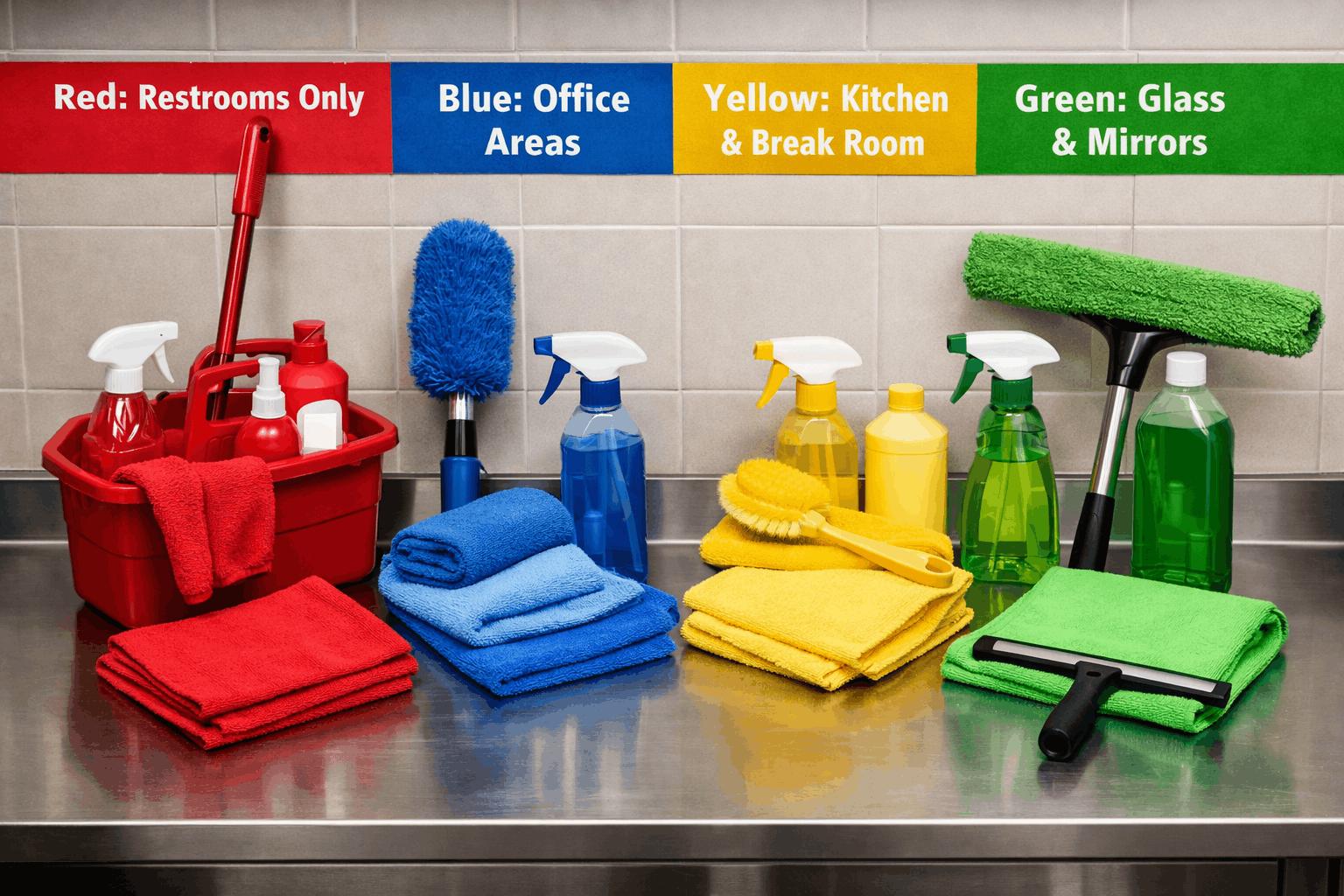
This is a trick that professional janitorial companies use that most offices never think about.
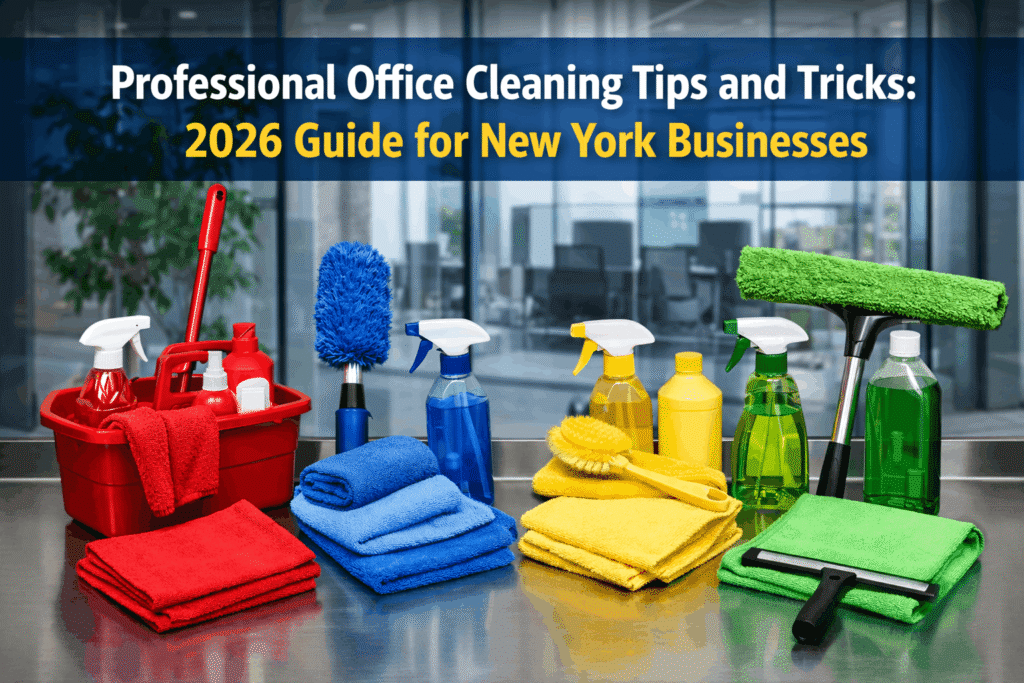
The system is simple. Assign different colored cloths and mops to different areas to prevent cross-contamination.
- Red cloths for restrooms only
- Blue cloths for general office surfaces
- Yellow cloths for the kitchen and break room
- Green cloths for glass and mirrors
This means the cloth used to scrub a restroom never touches the kitchen counter. Without a color system, cross-contamination is almost guaranteed in offices where one person handles all cleaning.
If you are evaluating cleaning companies in NYC, ask them directly whether they use color-coded tools. A company that does not know what you are talking about is not running a professional operation.
3. Use the Right Product for the Right Surface
Using one all-purpose spray on everything is one of the most common office cleaning mistakes. It is ineffective on some surfaces and damaging on others.
Here is a quick reference guide:
| Surface | Use This | Avoid This |
|---|---|---|
| Desks and laminate tables | Multi-surface disinfectant spray | Bleach products, fades the surface |
| Keyboards and phones | 70% isopropyl alcohol wipes | Wet liquids, damages electronics |
| Glass partitions | Ammonia-free glass cleaner | Paper towels, leaves lint streaks |
| Hardwood or vinyl floors | pH-neutral floor cleaner | Vinegar-based products, ruins finish |
| Office restrooms | Quaternary ammonium disinfectant | Mixing bleach and ammonia, toxic fumes |
| Kitchen counters | Food-safe disinfectant | Abrasive scrubbers on stainless steel |
Spending a little more on the right products protects your surfaces and gives better cleaning results. Cheap all-purpose products often just move dirt around.
4. Never Ignore Your Carpets
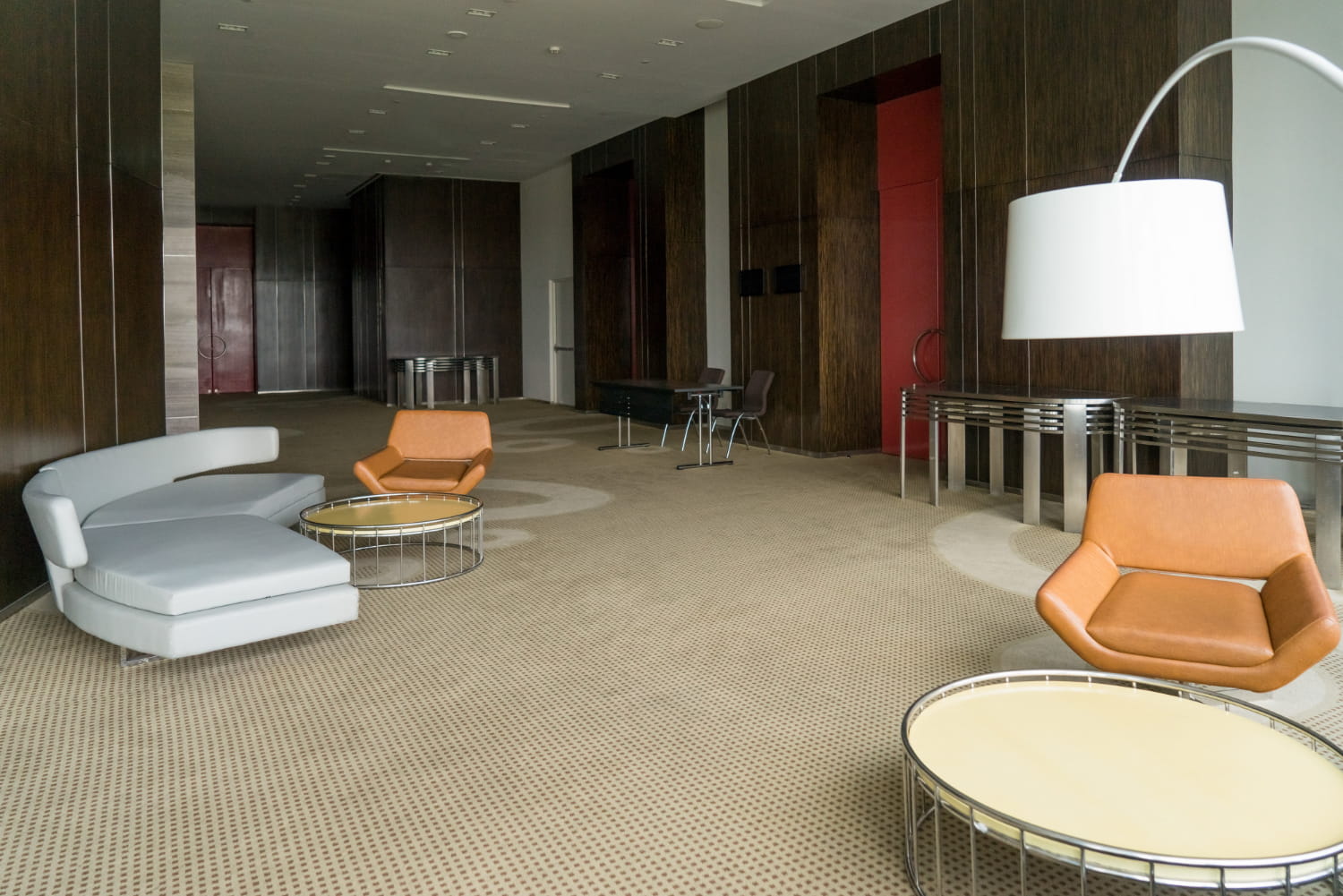
Carpets are the most underestimated source of bacteria, allergens, and odors in any office.
According to the Carpet and Rug Institute, office carpet can hold up to four times its own weight in dirt before it visually looks dirty. By the time your carpet starts looking like it needs cleaning, it has been well overdue for weeks.
For NYC offices, the standard is:
- Vacuum daily in high-traffic areas like reception and hallways
- Vacuum 2 to 3 times per week in individual offices
- Professional hot water extraction every 3 to 6 months
- Spot treat spills immediately before they set permanently
One underrated move: place commercial-grade entry mats at your office door. Research shows a proper entry mat system reduces tracked-in dirt by up to 85%. In a city like New York where streets carry dust, pollution, and debris year-round, this single step significantly reduces how fast your carpets get dirty.
Also Read this – Home Cleaning Tips That Actually Work (Beginner Guide 2026)
5. Take the Kitchen Seriously
Most people assume the restroom is the dirtiest part of an office. They are wrong.
A University of Arizona study found that office kitchen sinks contain significantly more bacteria than the average office toilet seat. The communal fridge, microwave, and coffee machine are all regularly contaminated, and they rarely get the attention they need.
A practical kitchen cleaning routine:
- Wipe counters, sink, and appliance exteriors daily
- Clean microwave interior daily (food splatter is the fastest bacteria source in the office)
- Empty the refrigerator of anything over 7 days old every Friday
- Descale the coffee machine monthly (NYC water causes faster limescale buildup)
- Pour boiling water or a diluted bleach solution down the sink drain weekly to prevent bacterial buildup
Post a short kitchen policy near the sink. Something friendly and simple, asking people to rinse dishes immediately and label their food. When employees take shared ownership of the space, cleaning becomes a team effort rather than a constant management problem.
6. Improve Air Quality as Part of Your Routine
Most office cleaning focuses entirely on visible surfaces. Air quality is almost always ignored, even though it has a direct impact on employee health and concentration.
In New York specifically, indoor air quality is a real concern. Older commercial buildings often have aging HVAC systems. Street-level pollution from traffic enters through gaps in windows and doors throughout the day. Without active management, the air inside your office can be more polluted than the air outside.
Simple steps that make a measurable difference:
- Replace HVAC filters every 60 to 90 days, or monthly in high-traffic spaces
- Clean air vents with a vacuum and damp cloth quarterly
- Use HEPA air purifiers in conference rooms and areas with poor ventilation
- Add low-maintenance air-purifying plants like snake plants or pothos
- Avoid aerosol air fresheners, which add chemical particles to the air
Clean air improves focus, reduces headaches, and lowers the risk of respiratory illness. It is one of the easiest wins in office health that almost no one prioritizes.
7. Handle Office Electronics Safely
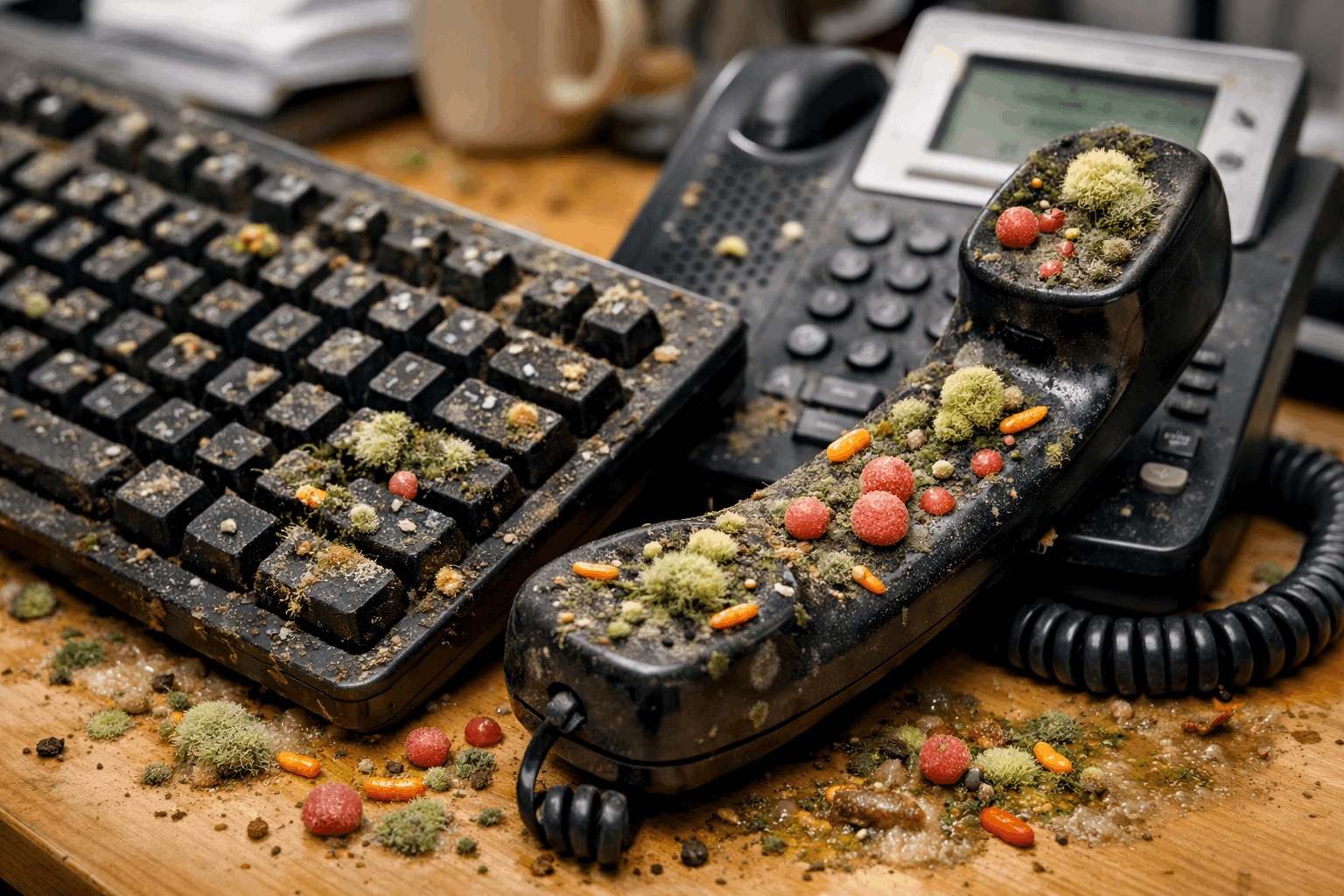
Keyboards and office phones are among the most contaminated objects in any workplace. National Center for Health Research found that the average office desk carries 400 times more bacteria than a toilet seat, and most of that is concentrated on keyboards and handsets.
The right way to clean electronics:
- Power off keyboards before cleaning. Turn upside down, tap gently to remove debris, use compressed air between keys, then wipe with a 70% isopropyl alcohol wipe.
- Never spray cleaner directly onto a monitor screen. Use a dry microfiber cloth first, then a lightly dampened one with distilled water.
- Wipe phone handsets and dialpads with alcohol wipes daily. In hot-desking setups, mount a small wipes dispenser next to shared phones.
- Wipe printer control panels and shared device touch screens daily.
These take less than two minutes per workstation and significantly reduce how quickly illness spreads through a team.
8. Set Up a Proper Waste System
Poorly managed waste creates odors, attracts pests, and makes an office look unprofessional no matter how clean everything else is.
For NYC businesses, waste management also involves legal compliance. Under NYC’s mandatory recycling rules and the Commercial Waste Zones program, businesses are required to properly separate recyclables from general waste.
A simple system that works:
- Keep under-desk bins small and for dry waste only, paper and packaging
- Place three bins in the kitchen: general waste, recycling, and compost if applicable
- Use liners in all bins so emptying is fast and the bin itself stays clean
- Empty high-traffic bins daily regardless of how full they look
- Include waste separation guidelines in your cleaning service contract
It takes one afternoon to set this up properly. After that, it runs itself.
9. Adjust Your Cleaning Routine Seasonally
New York has four very different seasons, and your cleaning protocol needs to adapt to each one.
Winter: Place heavy-duty entry mats to manage snow, salt, and slush. Salt residue damages floors fast. Disinfect more aggressively during peak cold and flu months. HVAC filters clog faster when forced heat runs constantly.
Spring: Post-winter deep clean is essential. Carpets, windows, and surfaces accumulate months of buildup. Allergy season hits in April and May, so cleaning air vents and replacing filters becomes urgent. Check for any water damage from winter.
Summer: Humidity creates mold conditions, especially under sinks and in corners near any water source. Air conditioning runs constantly, so coils and filters need inspection. Entry areas need more frequent cleaning as outdoor foot traffic peaks.
Fall: Pre-holiday preparation starts in October. Deep clean before end-of-year client visits. Dust mite activity increases indoors as windows close for winter. Get HVAC systems inspected before you need them daily again.
10. Use a Cleaning Checklist Every Single Time
Professional commercial cleaners never rely on memory. They use checklists, and so should you or your cleaning service.
A checklist creates accountability. It ensures nothing gets skipped when someone is tired, rushed, or new to the job. It also makes it easier to spot when cleaning standards are slipping before it becomes a visible problem.
If you hire a cleaning company, ask to see their checklist template on the first visit. A company that does not use one is a company where corners get cut.
When to Hire a Professional vs. Handle It In-House
For offices under 1,000 sq ft with fewer than 5 employees, a combination of daily staff maintenance and a professional deep clean every 2 to 3 months is usually sufficient.
For offices between 1,000 and 5,000 sq ft, professional cleaning 3 to 5 times per week becomes worth the cost. The time your staff saves, plus the health and presentation benefits, easily offset the service fee.
For offices over 5,000 sq ft or with heavy daily foot traffic, daily professional cleaning is the standard in New York. Commercial cleaning in NYC typically costs between $150 and $600 per visit depending on office size, scope, and location.
When evaluating cleaning companies, always verify that they carry general liability insurance and workers’ compensation. Ask for itemized pricing, not just a flat monthly rate. Check Google and Yelp reviews specifically from businesses similar to yours in size and type.
FAQ: Professional Office Cleaning Tips New York
What is the best office cleaning schedule for a New York office?
The best office cleaning schedule for a NYC office uses a three-tier system. Daily tasks should cover disinfecting high-touch surfaces, cleaning restrooms, and emptying bins. Weekly tasks include mopping floors, vacuuming carpets, and cleaning glass surfaces. Monthly tasks cover deep carpet cleaning, HVAC filter replacement, and full sanitization behind furniture. For offices with 10 or more employees, professional cleaning 3 to 5 times per week is the standard in New York.
How often should an office be deep cleaned in New York City?
Most NYC offices should schedule a professional deep clean every 3 months at minimum. Offices with high daily foot traffic, shared workspaces, or client-facing areas should deep clean monthly. Deep cleaning covers tasks that regular visits do not, including carpet extraction, upholstery cleaning, HVAC vent cleaning, and sanitizing hard-to-reach areas behind and under furniture.
How much does office cleaning cost in NYC?
Commercial cleaning services New York providers typically charge between $150 and $600 per visit for offices up to 5,000 sq ft. The range depends on office size, services included, and frequency. Manhattan offices tend to sit at the higher end due to building access costs and higher operational overhead. Monthly contracts usually offer 10 to 20 percent savings over per-visit pricing.
What are the most important office hygiene tips for shared workspaces?
The most important office hygiene tips for shared workspaces are: disinfect all high-touch surfaces daily, use color-coded cleaning cloths to prevent cross-contamination, maintain a strict kitchen cleaning routine, clean shared electronics with alcohol wipes regularly, and ensure restrooms are cleaned multiple times per day. In NYC coworking environments, these steps are especially critical because surfaces are used by a high volume of different people throughout the day.
What should I look for when hiring commercial cleaning services in New York?
When hiring commercial cleaning services New York has to offer, look for companies that are fully insured with general liability and workers’ compensation, use documented cleaning protocols and checklists, provide itemized pricing, have verifiable Google and Yelp reviews from similar businesses, and offer a trial period or satisfaction guarantee. Ask specifically whether they use color-coded cleaning tools and EPA-registered disinfectants.
Does a clean office really improve employee productivity?
Yes, and the research backs it up. A Princeton University Neuroscience study found that physical clutter directly reduces the brain’s ability to focus and process information. A University of Arizona study linked dirty shared surfaces to increased workplace illness and absenteeism. For NYC businesses where commercial real estate costs $70 to $150 per sq ft annually, improving the productivity of every person working in that space makes professional office cleaning tips New York businesses follow a genuinely high-return investment.
Final Thoughts: Professional Office Cleaning Tips New York Businesses Need in 2026
A clean office in New York City is not a luxury. It is the foundation of a productive, professional, and healthy workplace.
These professional office cleaning tips New York businesses use are not complicated, but they do require consistency. Start with the workplace cleaning checklist in this guide. Tackle your kitchen hygiene this week. Introduce color-coded cleaning tools. Schedule a professional carpet extraction if it has been more than six months.
Whether you handle office cleaning NYC in-house or use commercial cleaning services New York has available, the key is having a system and sticking to it.
In a city as competitive as New York, an office that looks, smells, and feels well-maintained sends a powerful message to every client, employee, and partner who walks through the door.
That message is worth a lot.