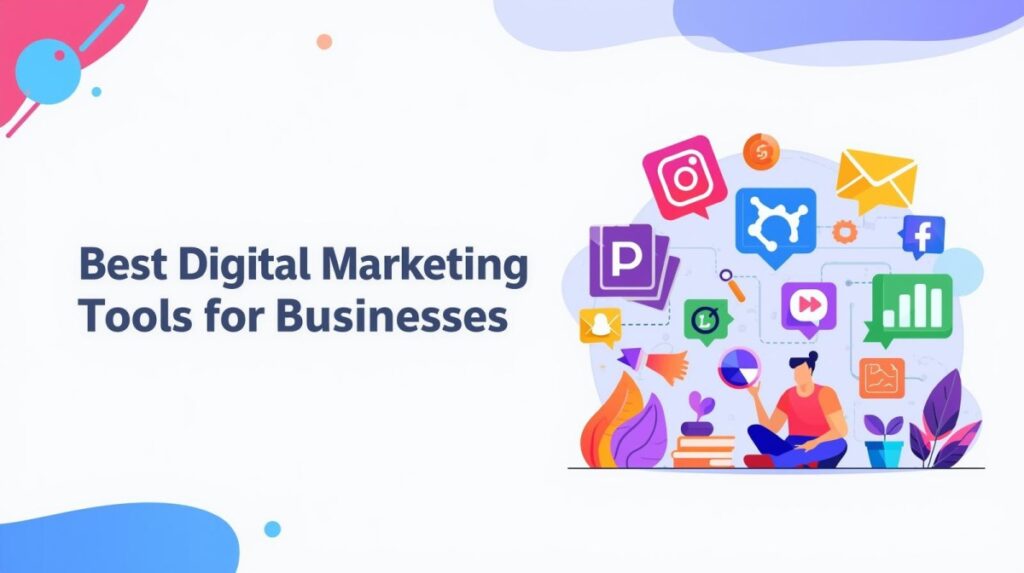
Best Digital Marketing Tools for Small Businesses (Actionable 2026 Guide)
When I started working with small businesses—local service providers, freelancers, and early-stage startups—the biggest mistake I saw again and again was this: too many tools, zero clarity.
Some business owners were paying for 8–10 tools and still not getting leads. Others were using just 3–4 tools and growing steadily. The difference was never budgeted. It was strategy + the right digital marketing tools for small businesses.
This guide is written from real SEO and digital marketing experience, not theory. I’ll explain what tools you actually need, how small businesses use them in real life, and how you can build a simple system that grows online without confusion.
Why small businesses need digital marketing tools today
Running a small business in 2026 without digital tools is like opening a shop without a signboard.
Your customers are:
- Searching on Google
- Checking reviews
- Comparing competitors
- Scrolling social media
Digital marketing tools help you:
- Get discovered
- Build trust
- Convert visitors into leads
- Measure what’s working (and what’s wasting money)
The goal is not “marketing noise.”
The goal is consistent, predictable growth.
The goal is consistent, predictable growth.
What I mean by digital marketing tools for small businesses
These are tools that help you with:
- Online visibility (SEO, ads, social)
- Lead generation & conversion
- Customer communication & follow-up
- Analytics & decision-making
- Automation (saving time)
They must be:
- Affordable
- Easy to learn
- Scalable as your business grows
If a tool doesn’t save time or make money, you don’t need it.
1. Website & CMS tools (your digital foundation)
Your website is not a brochure. It’s your salesperson that works 24/7.
Recommended options
- WordPress – best for long-term SEO and content marketing
- Wix / Squarespace – good for beginners and local businesses
- Landing page tools – for ads and campaigns
Real example
A local service client I worked with had traffic but no leads.
The issue wasn’t SEO—it was:
The issue wasn’t SEO—it was:
- Slow pages
- No clear CTA
- Confusing layout
After fixing the website structure and adding one focused landing page, conversions increased without increasing traffic.
Lesson: Tools don’t replace clarity.
2. SEO tools (long-term growth engine)
SEO is slow, but it’s the most sustainable channel for small businesses.
What tools actually help
- Keyword research & tracking tools
- On-page SEO plugins
- Technical SEO crawlers
Use tools to:
- Find long-tail keywords
- Fix indexing issues
- Improve content quality
Experience insight
Most small businesses don’t need “hard” SEO. They need:
- Correct titles
- Helpful content
- Proper internal linking
Over-optimization hurts more than under-optimization.
Use Google Search Console weekly to check:
- Pages indexed
- Queries bringing impressions
- Discover visibility
3. Content & blogging tools (trust + authority)
Content is how small businesses compete with big brands.
What works in real life
- Educational blogs
- How-to guides
- Problem-solution content
- Case studies
Personal observation
Articles written from experience always perform better than generic AI content.
Instead of:
Digital marketing is important for businesses
Write:
“When one of my clients stopped Facebook ads and focused on SEO, leads dropped for 2 months—but after month 3, organic leads doubled.”
That’s E-E-A-T:
- Experience
- Expertise
- Authority
- Trust
Tools help you write, but experience makes content rank.
4. Social media & design tools (visibility & branding)
Social media doesn’t always bring direct sales, but it builds trust.
Tools small businesses should use
- Scheduling tools (to stay consistent)
- Design tools (brand consistency)
Real-world use
I’ve seen local businesses with:
- Low followers
- But high conversions
Why?
Because their profiles showed:
Because their profiles showed:
- Real photos
- Real work
- Real testimonials
Use tools to save time—not to fake engagement.
5. Paid ads tools (fast testing, fast feedback)
Ads are not magic. They’re data tools.
Where ads work best
- Local services
- High-intent keywords
- Clear offers
My rule for small businesses
If you can’t track:
- Leads
- Cost per lead
- Conversion rate
Then you shouldn’t run ads yet.
Ads amplify systems. They don’t fix broken ones.
6. Email marketing & CRM tools (most ignored, most powerful)
Email is still one of the highest ROI channels.
Why small businesses should care
- Ads stop → email continues
- Algorithms change → email stays
- Direct communication → higher trust
Practical example
A service business with just 600 email subscribers generated more repeat sales than social media with 20k followers.
Email tools help you:
- Follow up
- Educate customers
- Build loyalty
7. Analytics & tracking tools (decision-making tools)
Data removes guessing.
Must-have tools
- Analytics for traffic & conversions
- Heatmaps to see user behavior
Real SEO habit
I always ask:
Which page brings leads, not just traffic?
Many pages rank but don’t convert. Tools help you fix that.
8. Automation tools (time = money)
Automation is underrated for small teams.
What to automate
- Form submissions → CRM
- New leads → email follow-ups
- Blog publish → social sharing
Even simple automation saves hours every week.
How small businesses should choose tools (simple rule)
Ask these 3 questions:
- Will this tool help me get leads or sales?
- Can I measure its impact?
- Can I afford it for at least 6 months?
If the answer is “no” to any—skip it.
Common mistakes I see small businesses make
- Buying tools before strategy
- Using premium plans without ROI
- Copying big brands’ tool stacks
- Ignoring basics (website + content)
Growth comes from consistency, not complexity.
FAQ
Can small businesses rely on AI tools?
Yes—but only as assistants.
AI helps with drafts and ideas, not trust and experience.
AI helps with drafts and ideas, not trust and experience.
How many tools are enough?
For most small businesses:
5–7 tools are more than enough.
5–7 tools are more than enough.
Is SEO better than ads?
SEO is slow but stable. Ads are fast but expensive.
The best strategy uses both.
The best strategy uses both.
How long before results?
- Ads: days
- Social: weeks
- SEO: months
Anyone promising instant SEO results is selling dreams.
Final advice (honest & practical)
Digital marketing tools are not shortcuts.
They are levers.
They are levers.
If you:
- Understand your customer
- Create helpful content
- Track results honestly
Even a small business can compete with big brands.
Focus on:
- Value
- Trust
- Consistency
Tools will support you—but strategy will grow you