
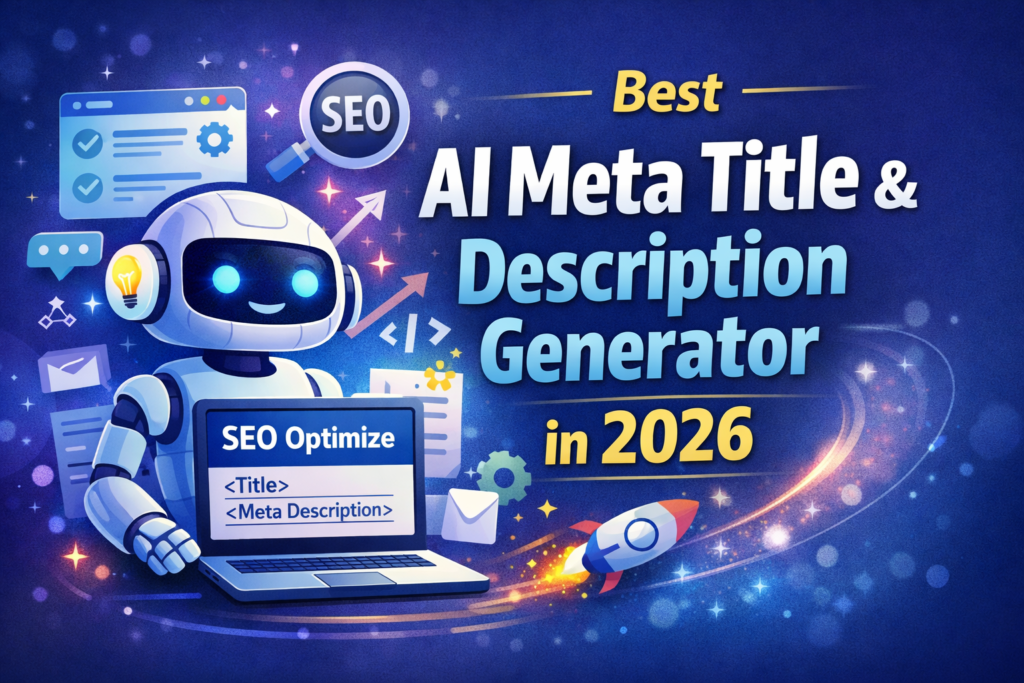
Best AI Meta Title and Description Generator in 2026
Meta titles and descriptions are small elements with massive SEO impact. They influence how your website appears in search results and directly affect click-through rate (CTR).
In 2026, AI-powered meta generators are changing how bloggers, businesses, and marketers create optimized metadata. Instead of guessing what works, AI tools analyze keywords, search intent, and SERP behavior to generate compelling titles and descriptions in seconds.
In this guide, you’ll discover the best AI meta title and description generators, how they work, and how to use them effectively for SEO growth.
What Is an AI Meta Title and Description Generator?
An AI meta generator is a tool that automatically creates SEO-optimized meta titles and descriptions using artificial intelligence. These tools analyze your primary keyword, user intent, and search trends to generate high-converting metadata.
According to Google’s official documentation on search snippets, Google may rewrite your meta description if it doesn’t match user intent. You can read more about this in the official Google Search Central documentation.
That means writing optimized, intent-focused meta tags is more important than ever.
Why Meta Titles and Descriptions Matter for SEO
Many beginners think meta descriptions directly improve rankings. Technically, they are not a direct ranking factor.
However, they strongly impact:
- Click-through rate (CTR)
- User engagement
- Search result visibility
- Brand credibility
Google has confirmed that user experience and engagement signals influence search performance. You can explore SEO fundamentals from the official Google Search Central Blog here.
When your title is compelling and your description matches intent, users click. When users click more often, Google notices.
Best AI Meta Title and Description Generators in 2026
Here are some of the most reliable AI tools currently used by marketers and bloggers:
1. Jasper AI
Jasper uses advanced AI models to generate SEO-focused meta titles and descriptions. It’s ideal for agencies and content marketers.
2. Copy.ai
Copy.ai provides simple meta description templates and is beginner-friendly.
3. Writesonic
Writesonic offers SEO meta generators and integrates keyword suggestions.
4. ChatGPT
ChatGPT can generate customized meta titles when given proper prompts, especially useful for long-tail keyword targeting.
5. Surfer SEO
Surfer combines AI generation with SEO optimization recommendations based on live SERP data.
These tools help streamline content workflows and improve metadata efficiency.
How to Choose the Right AI Meta Generator
Not all tools are equal. Here’s what you should look for:
Keyword Integration
The tool should naturally insert your primary keyword without keyword stuffing.
Character Control
Meta titles should be 50–60 characters.
Meta descriptions should be 150–160 characters.
SERP Preview
The best tools show how your snippet appears in search results.
AI + SEO Combination
Look for tools that combine AI writing with SEO optimization insights.
How to Use AI Meta Generators Properly
Many bloggers make a mistake: they copy and paste AI output without editing.
That’s not smart.
Here’s the correct method:
- Enter your main keyword.
- Generate 3–5 variations.
- Choose the most natural and compelling option.
- Edit for clarity and brand tone.
- Ensure it matches actual page content.
Remember, Google prioritizes helpful, relevant content. If your meta description promises something your page doesn’t deliver, Google may rewrite it.
Real Example
Let’s say your keyword is:
“AI meta description generator”
Weak meta description:
Generate meta descriptions easily with AI tools online.
Optimized version:
Discover the best AI meta description generator in 2026 to create SEO-optimized titles and improve click-through rates instantly.
See the difference?
Specific. Clear. Benefit-focused.
Does an AI Meta Generator Improve Rankings?
AI tools don’t directly improve rankings.
But they help you:
- Write clearer titles
- Improve CTR
- Match search intent
- Save time
SEO is about consistency and optimization. AI simply makes the process faster and more strategic.
If you want to understand how Google evaluates helpful content, review Google’s helpful content system here.
That document explains exactly what Google expects from publishers in 2026.
Common Mistakes to Avoid
❌ Keyword stuffing in titles
❌ Clickbait descriptions
❌ Too long or too short meta tags
❌ Copying competitor metadata
❌ Using AI output without human review
AI is a tool — not a replacement for strategy.
Best Strategy for Long-Term SEO Growth
If you want sustainable traffic:
- Focus on long-tail keywords
- Write helpful content
- Optimize metadata manually after AI generation
- Update old meta tags every 6–12 months
- Monitor CTR in Google Search Console
AI meta generators are powerful — but SEO success still depends on value, clarity, and structure.
Frequently Asked Questions
What is the ideal length for a meta title?
Meta titles should stay between 50–60 characters to avoid truncation in Google search results.
How long should a meta description be?
150–160 characters is ideal for desktop results.
Can AI meta generators replace manual writing?
No. They assist, but manual review ensures better alignment with content and brand voice.
Are free AI meta generators effective?
Yes, for basic use. Advanced SEO insights usually require paid tools.
Does Google always use my meta description?
No. Google may rewrite it if it doesn’t match search intent.
Final Thoughts
The best AI meta title and description generator in 2026 is not just about automation — it’s about intelligent optimization.
AI tools save time.
SEO knowledge drives results.
If you combine both, you build sustainable organic traffic.
Now the important part:
Don’t just generate metadata.
Test it. Improve it. Track CTR. Refine.
That’s how you grow.